
x
Image
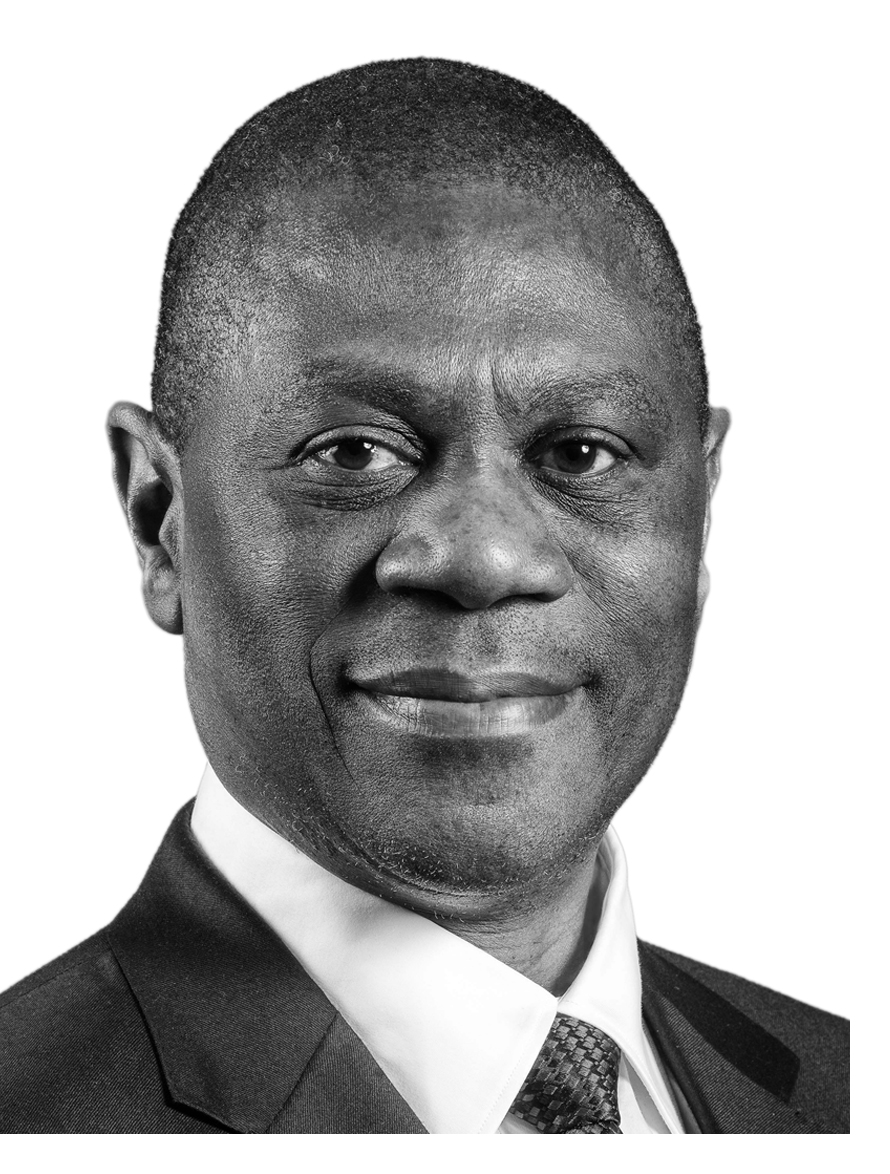
Address by Deputy President Shipokosa Paulus Mashatile on the occasion of the 2nd International Special Economic Zones (SEZ) Conference, Durban ICC, KwaZulu-Natal
Body

Programme Director;
Premier of KwaZulu-Natal, Mr Thamsanqa Ntuli and Premiers here present;
Mayor of eThekwini, Councillor Cyril Xaba;
South Africa's Minister of Trade, Industry and Competition, Mr Parks Tau and Deputy Minister, Mr Zuko Godlimpi;
Ministers and Deputy Ministers present, I have seen Deputy Minister of Public Service and Administration, Ms Pinky Kekana;
Reverend Musa Zondi, MECs and Mayors present;
Chairperson of the Portfolio Committee on Trade, Industry and Competition, Mr Mzwandile Masina and Select Committee Chairperson, Mrs Hildergard Sonja-Boshoff;
SEZ Advisory Board Chairperson, Mr Fish Mahlalela, and CEOs of our Special Economic Zones and Industrial Parks;
Members of the Diplomatic corps;
International partners; 
Distinguished investors and captains of industry;
Development partners, labour and community leaders;
Our friends from the media;
Ladies and gentlemen,
Good morning, Sanibonani!

Thank you, Executive Mayor Xaba, for the warm welcome, and Minister Parks Tau for setting the scene of the conference. It is a privilege to attend the Second International Special Economic Zones Conference in Durban, a city that represents the transformative potential of Special Economic Zones (SEZs) in promoting investment and inclusive economic growth.

Durban is the leading marine gateway in sub-Saharan Africa, with the Port of Durban as its centrepiece. The city is a critical node between the industrialised interior, particularly Gauteng, and the global markets, handling a large proportion of South Africa’s sea-borne goods. Its progress from a colonial trading post to an important international hub is based on centuries of history, strategic industrial policies and continuous infrastructure development.

Today, the legacy of strategic infrastructure and industrial development is exemplified by the Dube TradePort and the Durban SEZ. These initiatives are driving investment, innovation and economic transformation, particularly the linking of the Dube TradePort with King Shaka International Airport and the Port of Durban, which handles more than 60% of South Africa’s container traffic. 

It is therefore fitting that we have gathered here today to advance a national project of spatial and industrial transformation. At its heart, this project is focused on building a more productive, competitive, and inclusive economy. This includes the creation of sustainable jobs, the expansion of opportunities for enterprises, and the restoration of dignity through meaningful economic participation for all people.

As President Nelson Mandela reminded us, “Overcoming poverty is not a gesture of charity. It is an act of justice. It is the protection of a fundamental human right, the right to dignity and a decent life”.

Our SEZs are, in many respects, an expression of that vision of creating the conditions for investment, industrialisation, employment, and shared prosperity, so that economic growth becomes a pathway to economic freedom, dignity and a better life for all South Africans.

This task extends beyond any single province. Across our nation, from KwaZulu-Natal to Limpopo, from the Eastern Cape to the Northern Cape, SEZs are unlocking regional potential, strengthening industrial capacity, and connecting local enterprises to regional and global markets.

They are also strategically positioning South Africa as a gateway to the African continent and supporting the broader vision of an integrated, industrialised and prosperous Africa.

Indeed, this is a vision rooted in a strategic choice South Africa made nearly three decades ago. In 1997, we introduced the Industrial Development Zone programme to create world-class industrial hubs that would attract investment, boost exports, and drive industrial growth.

Recognising the power of strategic infrastructure and supportive policy, the programme laid the foundation for a more competitive and diversified economy. Over time, it has evolved into the Special Economic Zones programme, with a broader focus on accelerating industrialisation, creating jobs, and driving inclusive economic development in South Africa and across the African continent.

Honoured delegates,

A World Bank study has concluded that South Africa's SEZ programme has proved successful so far, attracting R14.8 billion in revenue and creating more than 30,000 jobs across sectors like automotive manufacturing, agro-processing and renewable energy.

Key benchmark projects, such as the Tshwane Automotive Special Economic Zone (TASEZ) and the Coega Industrial Development Zone in the Eastern Cape, serve as primary drivers for skills development and downstream supply chains.

We have learned valuable lessons since Coega was designated in 2001. By 2010, Government had invested more than R3 billion in Coega alone, attracting 21 investments valued at R9.2 billion and generating 2,837 operational jobs. However, some of these investments were not new, but had relocated from elsewhere due to weakened municipal service delivery and township integration, leading to zones risking becoming enclaves.

In response to this, in 2012 we shifted to Special Economic Zones under the SEZ Act. and today under the leadership of President Cyril Ramaphosa, we are entering a third phase: the Spatial Industrial Development Strategy. 

To ignite manufacturing-led industrialisation, the South African government has identified key economic sectors categorised into three areas:

(i) Decarbonisation, aimed at low-carbon technologies and climate resilience; 
(ii) Diversification, focused on expanding the manufacturing base for value-added goods and export markets; and 
(iii) Digitalisation, emphasising the integration of productivity-enhancing digital technologies across industries.

The Industrial Development Strategy aims to increase the manufacturing sector's GDP contribution from 12%, as manufacturing has significant multipliers to reduce socio-economic issues like unemployment especially among youth and women. The Special Economic Zones Programme is a key mechanism for this re-industrialisation agenda, and after more than a decade, it's crucial to evaluate its impact.

As former Deputy Minister Majola said at the SEZ CEOs Forum, “SEZs and industrial parks are critical players in South Africa’s industrialisation agenda and economic growth. But they will not succeed unless we improve performance in each of the SEZs.”

This therefore requires fully operational, well-resourced SEZs supported by reliable infrastructure, efficient regulation, and good governance to drive industrialisation, attract investment, and stimulate inclusive economic growth.

Colleagues, we are not starting from a blank slate. We are building on an existing network of SEZs and Industrial Parks that have already established industrial foundations across every province of our country.

From Coega, the largest SEZ on the African continent, spanning more than 9,000 hectares, driving automotive, energy and manufacturing clusters alongside the Port of Ngqura;

To Saldanha Bay, our only designated freeport, strategically positioned to develop South Africa as a leading marine repair and services hub for the Atlantic and Indian Ocean oil and gas industries;

To Musina-Makhado, located along the vital N1 North–South Corridor into the Southern African Development Community (SADC), with a focus on mineral beneficiation, logistics and agro-processing;

And to the East London Industrial Development Zone, a UNIDO-recognised Eco-Industrial Park that is setting the benchmark for green industrialisation, automotive components and sustainable manufacturing.

Together, these strategic industrial platforms demonstrate that the foundations for accelerated industrial growth are already in place. Our task is to strengthen their performance, deepen their integration into regional and global value chains, and ensure that they become powerful engines of investment and inclusive economic development.

But we must go further. The new Spatial Industrial Development Strategy demands that we reference every new zone against six layers:

1. Infrastructure corridors – ports, rail, and energy. No zone can thrive in isolation.
2. Resource endowments – from the Bushveld Platinum Group Metals (PGMs) to our agricultural belts.
3. Existing Industrial Parks – Isithebe, Ezakheni, Babelegi. We must revitalise them and plug them into SEZ value chains.
4. The District Development Model – Every district must identify its competitive advantage.
5. Socio-economic data – Zones must be located where jobs are needed most.
6. Community integration – A zone is not successful if the township next door sees no benefit.

This is spatial referencing not as a technical exercise but as a tool for both spatial and economic justice.

I should also make it clear that as Government, we are not planning for the next election cycle. We are planning for the next generation. In this regard, the Cabinet has endorsed a 20-year SEZ development framework, with formal evaluations every five years.

Years 0-5: Baseline and Discipline. We will map, audit, and set KPIs for every zone. Investment, jobs, exports, and SME linkages. No more vanity projects.

Year 5: First Evaluation. We will ask challenging questions: Did this zone generate new investment, or did it simply relocate existing investments? Did it create jobs? If a zone scores below 60% on our scorecard, we will trigger the five-year intervention framework that Minister Tau has announced. We will restructure, repurpose, or de-designate if necessary.

Years 5-15: Consolidation and Expansion. We will deepen clusters – automotive in Coega and East London, PGMs in Limpopo, and marine in Saldanha. We will sign SEZ Pacts so that National Government, Provincial Government, and District Municipalities deliver incentives in unison.

Years 15-20: Maturity. By 2046, we must fully integrate our SEZs into global value chains and their local communities. A young person in Mthatha should be able to envision a career path that starts at a TVET College, progresses to an SME supplier, moves to a factory floor in the East London IDZ, and ultimately leads to an export market.

Honoured guests,

Investors tell us that they want certainty. This certainty is provided through among others the three-sphere incentive package:

Nationally, we offer the 15% corporate tax rate for qualifying SEZ companies, and the Section 12i Manufacturing Allowance of up to R900 million, VAT and customs relief in our Customs Controlled Areas, and the Employment Tax Incentive for youth.

Provincially, our entities, such as the Coega Development Corporation and SBIDZ, provide subsidised land, world-class infrastructure, and bespoke skills programmes.

At the district level, our municipalities commit through Service Level Agreements to fast-track zoning, provide bulk services, and ensure 30% procurement from local SMMEs within a 5km radius.

However, incentives are not entitlements. They are part of a compact. In return, we expect investment, exports, jobs, and transformation.

Ladies and gentlemen,

We have 5,400 SEZs globally competing for the same capital. We cannot compete simply by being the cheapest. We compete by being the most strategic, the most reliable, and the most inclusive.

To our SEZ CEOs: Your performance will be measured every five years. Not on glossy brochures, but on actual jobs and exports.

To our Mayors: An SEZ cannot function if there is no water, no electricity, or no road to the factory gate. 

The District Development Model must assist us to actively implement the District Development Model in your Integrated Development Plan (IDP).

To our investors: South Africa is open for business, but we are not open for extraction. We want you to benefit here, to train here, and to partner with our SMMEs here. 

To our communities: These zones are yours. Hold us accountable. The girl in Mdantsane must see the East London IDZ as a promising future for her and generations to come. The artisan in Musina must see the SEZ as a market, and most importantly, a door to global markets.

In closing, let me leave you with the guiding vision of South Africa's Industrial Policy: "Industrialisation to create employment and rising incomes; transformation to build an inclusive economy; and a capable state to drive effective implementation."

That is the mandate before us. As we leave Durban, let us renew our collective commitment to ensure that our Special Economic Zones become engines of investment, innovation and opportunity, not islands of prosperity, but catalysts for inclusive growth that will uplift every province and every community across our country.

I thank you. Inkomu.

Image
Address by the Deputy President Shipokosa Paulus Mashatile on the occasion of the Second International Special Economic Zones (SEZ) Conference, Durban ICC, KwaZulu-Natal Province
Body

Programme Director;
Premier of KwaZulu-Natal, Mr Thamsanqa Ntuli and Premiers here present;
Mayor of eThekwini, Councillor Cyril Xaba;
South Africa's Minister of Trade, Industry and Competition, Mr Parks Tau and Deputy Minister, Mr Zuko Godlimpi;
Ministers and Deputy Ministers present, I have seen Deputy Minister of Public Service and Administration, Ms Pinky Kekana;
Reverend Musa Zondi, MECs and Mayors present;
Chairperson of the Portfolio Committee on Trade, Industry and Competition, Mr Mzwandile Masina and Select Committee Chairperson, Mrs Hildergard Sonja-Boshoff;
SEZ Advisory Board Chairperson, Mr Fish Mahlalela and CEOs of our Special Economic Zones and Industrial Parks;
Members of the Diplomatic corps;
International partners; 
Distinguished Investors and Captains of Industry;
Development Partners, Labour and Community Leaders;
Our Friends from the media;
Ladies and Gentlemen,
Good Morning, Sanibonani!

Thank you, Executive Mayor Xaba, for the warm welcome, and Minister Parks Tau for setting the scene of the conference. It is a privilege to attend the Second International Special Economic Zones Conference in Durban, a city that represents the transformative potential of Special Economic Zones (SEZs) in promoting investment and inclusive economic growth.

Durban is the leading marine gateway in sub-Saharan Africa, with the Port of Durban as its centrepiece. The city is a critical node between the industrialised interior, particularly Gauteng, and the global markets, handling a large proportion of South Africa’s sea-borne goods. Its progress from a colonial trading post to an important international hub is based on centuries of history, strategic industrial policies and continuous infrastructure development.

Today, the legacy of strategic infrastructure and industrial development is exemplified by the Dube TradePort and the Durban SEZ. These initiatives are driving investment, innovation and economic transformation, particularly the linking of the Dube TradePort with King Shaka International Airport and the Port of Durban, which handles more than 60% of South Africa’s container traffic. 

It is therefore fitting that we have gathered here today to advance a national project of spatial and industrial transformation. At its heart, this project is focused on building a more productive, competitive, and inclusive economy. This includes the creation of sustainable jobs, the expansion of opportunities for enterprises, and the restoration of dignity through meaningful economic participation for all people.
As President Nelson Mandela reminded us, “Overcoming poverty is not a gesture of charity. It is an act of justice. It is the protection of a fundamental human right, the right to dignity and a decent life”.

Our SEZs are, in many respects, an expression of that vision of creating the conditions for investment, industrialisation, employment, and shared prosperity, so that economic growth becomes a pathway to economic freedom, dignity and a better life for all South Africans.

This task extends beyond any single province. Across our nation, from KwaZulu-Natal to Limpopo, from the Eastern Cape to the Northern Cape, SEZs are unlocking regional potential, strengthening industrial capacity, and connecting local enterprises to regional and global markets.

They are also strategically positioning South Africa as a gateway to the African continent and supporting the broader vision of an integrated, industrialised and prosperous Africa.

Indeed, this is a vision rooted in a strategic choice South Africa made nearly three decades ago. In 1997, we introduced the Industrial Development Zone programme to create world-class industrial hubs that would attract investment, boost exports, and drive industrial growth.

Recognising the power of strategic infrastructure and supportive policy, the programme laid the foundation for a more competitive and diversified economy. Over time, it has evolved into the Special Economic Zones programme, with a broader focus on accelerating industrialisation, creating jobs, and driving inclusive economic development in South Africa and across the African continent.

Honoured Delegates,

A World Bank study has concluded that South Africa's SEZ programme has proved successful so far, attracting R14.8 billion in revenue and creating more than 30,000 jobs across sectors like automotive manufacturing, agro-processing and renewable energy.

Key benchmark projects, such as the Tshwane Automotive Special Economic Zone (TASEZ) and the Coega Industrial Development Zone in the Eastern Cape, serve as primary drivers for skills development and downstream supply chains.
We have learned valuable lessons since Coega was designated in 2001. By 2010, Government had invested more than R3 billion in Coega alone, attracting 21 investments valued at R9.2 billion and generating 2,837 operational jobs. However, some of these investments were not new, but had relocated from elsewhere due to weakened municipal service delivery and township integration, leading to zones risking becoming enclaves.
In response to this, in 2012 we shifted to Special Economic Zones under the SEZ Act. and today under the leadership of President Cyril Ramaphosa, we are entering a third phase: the Spatial Industrial Development Strategy. 

To ignite manufacturing-led industrialisation, the South African government has identified key economic sectors categorised into three areas:
(i) Decarbonisation, aimed at low-carbon technologies and climate resilience; 
(ii) Diversification, focused on expanding the manufacturing base for value-added goods and export markets; and 
(iii) Digitalisation, emphasising the integration of productivity-enhancing digital technologies across industries.
The Industrial Development Strategy aims to increase the manufacturing sector's GDP contribution from 12%, as manufacturing has significant multipliers to reduce socio-economic issues like unemployment especially among youth and women. The Special Economic Zones Programme is a key mechanism for this re-industrialisation agenda, and after more than a decade, it's crucial to evaluate its impact.

As former Deputy Minister Majola said at the SEZ CEOs Forum, “SEZs and industrial parks are critical players in South Africa’s industrialisation agenda and economic growth. But they will not succeed unless we improve performance in each of the SEZs.”
This therefore requires fully operational, well-resourced SEZs supported by reliable infrastructure, efficient regulation, and good governance to drive industrialisation, attract investment, and stimulate inclusive economic growth.

Colleagues, we are not starting from a blank slate. We are building on an existing network of SEZs and Industrial Parks that have already established industrial foundations across every province of our country.

From Coega, the largest SEZ on the African continent, spanning more than 9,000 hectares, driving automotive, energy and manufacturing clusters alongside the Port of Ngqura;

To Saldanha Bay, our only designated freeport, strategically positioned to develop South Africa as a leading marine repair and services hub for the Atlantic and Indian Ocean oil and gas industries;

To Musina-Makhado, located along the vital N1 North–South Corridor into the Southern African Development Community (SADC), with a focus on mineral beneficiation, logistics and agro-processing;

And to the East London Industrial Development Zone, a UNIDO-recognised Eco-Industrial Park that is setting the benchmark for green industrialisation, automotive components and sustainable manufacturing.

Together, these strategic industrial platforms demonstrate that the foundations for accelerated industrial growth are already in place. Our task is to strengthen their performance, deepen their integration into regional and global value chains, and ensure that they become powerful engines of investment and inclusive economic development.

But we must go further. The new Spatial Industrial Development Strategy demands that we reference every new zone against six layers:
1. Infrastructure corridors – ports, rail, and energy. No zone can thrive in isolation.
2. Resource endowments – from the Bushveld Platinum Group Metals (PGMs) to our agricultural belts.
3. Existing Industrial Parks – Isithebe, Ezakheni, Babelegi. We must revitalise them and plug them into SEZ value chains.
4. The District Development Model – Every district must identify its competitive advantage.
5. Socio-economic data – Zones must be located where jobs are needed most.
6. Community integration – A zone is not successful if the township next door sees no benefit.

This is spatial referencing not as a technical exercise but as a tool for both spatial and economic justice.

I should also make it clear that as Government, we are not planning for the next election cycle. We are planning for the next generation. In this regard, the Cabinet has endorsed a 20-year SEZ development framework, with formal evaluations every five years.

Years 0-5: Baseline and Discipline. We will map, audit, and set KPIs for every zone. Investment, jobs, exports, and SME linkages. No more vanity projects.

Year 5: First Evaluation. We will ask challenging questions: Did this zone generate new investment, or did it simply relocate existing investments? Did it create jobs? If a zone scores below 60% on our scorecard, we will trigger the five-year intervention framework that Minister Tau has announced. We will restructure, repurpose, or de-designate if necessary.

Years 5-15: Consolidation and Expansion. We will deepen clusters – automotive in Coega and East London, PGMs in Limpopo, and marine in Saldanha. We will sign SEZ Pacts so that National Government, Provincial Government, and District Municipalities deliver incentives in unison.

Years 15-20: Maturity. By 2046, we must fully integrate our SEZs into global value chains and their local communities. A young person in Mthatha should be able to envision a career path that starts at a TVET College, progresses to an SME supplier, moves to a factory floor in the East London IDZ, and ultimately leads to an export market.

Honoured Guests,

Investors tell us that they want certainty. This certainty is provided through among others the three-sphere incentive package:
Nationally, we offer the 15% corporate tax rate for qualifying SEZ companies, and the Section 12i Manufacturing Allowance of up to R900 million, VAT and customs relief in our Customs Controlled Areas, and the Employment Tax Incentive for youth.
Provincially, our entities, such as the Coega Development Corporation and SBIDZ, provide subsidised land, world-class infrastructure, and bespoke skills programmes.

At the district level, our municipalities commit through Service Level Agreements to fast-track zoning, provide bulk services, and ensure 30% procurement from local SMMEs within a 5km radius.

However, incentives are not entitlements. They are part of a compact. In return, we expect investment, exports, jobs, and transformation.

Ladies and Gentlemen,

We have 5,400 SEZs globally competing for the same capital. We cannot compete simply by being the cheapest. We compete by being the most strategic, the most reliable, and the most inclusive.

To our SEZ CEOs: Your performance will be measured every five years. Not on glossy brochures, but on actual jobs and exports.
To our Mayors: An SEZ cannot function if there is no water, no electricity, or no road to the factory gate. 

The District Development Model must assist us to actively implement the District Development Model in your Integrated Development Plan (IDP).

To our investors: South Africa is open for business, but we are not open for extraction. We want you to benefit here, to train here, and to partner with our SMMEs here. 

To our communities: These zones are yours. Hold us accountable. The girl in Mdantsane must see the East London IDZ as a promising future for her and generations to come. The artisan in Musina must see the SEZ as a market, and most importantly, a door to global markets.

In closing, let me leave you with the guiding vision of South Africa's Industrial Policy: "Industrialisation to create employment and rising incomes; transformation to build an inclusive economy; and a capable state to drive effective implementation."

That is the mandate before us. As we leave Durban, let us renew our collective commitment to ensure that our Special Economic Zones become engines of investment, innovation and opportunity, not islands of prosperity, but catalysts for inclusive growth that will uplift every province and every community across our country.

I Thank You, Inkomu.
 

Image
President Ramaphosa to participate in Mandela Day Walk and Run 2026
Body

President Cyril Ramaphosa will on Sunday, 19 July 2026, participate in the Mandela Day Walk and Run 2026 at the DP World Wanderers Stadium in Johannesburg.

The President, an avid walker in his free time, will join thousands of South Africans in the annual event and participate in the 5-kilometre walk in support of Nelson Mandela International Day, which is commemorated annually on 18 July.

Nelson Mandela International Day, officially recognised by the United Nations in 2009, honours the life and legacy of former President Nelson Rolihlahla Mandela and serves as a global call to action for individuals, communities, governments, civil society and the private sector to take responsibility for building more just, inclusive and equitable societies.

This year's Nelson Mandela International Day will be commemorated under the theme, "It is still in our hands to combat poverty and inequity," with the call to action, "It is in your hands now."

The theme reflects Madiba's enduring belief that each person has the power to make a meaningful contribution towards addressing poverty, inequality and social injustice through acts of service, solidarity and compassion.

Mandela Day encourages people across the world to dedicate 67 minutes of their time in service to others, symbolising the 67 years Nelson Mandela devoted to the struggle for freedom, justice, equality and human dignity. While 18 July remains the focal point of the global campaign, Mandela Day also encourages sustained acts of community service that create lasting and meaningful social impact.

The Mandela Day Walk and Run has become one of South Africa's flagship commemorative events, bringing together people from all walks of life in celebration of Madiba's values of active citizenship, unity, healthy living and service to others. 

The event provides an opportunity for South Africans to honour Madiba's legacy not only through participation, but by recommitting themselves to building stronger, more caring and more resilient communities.

President Ramaphosa's participation reaffirms Government's commitment to preserving and advancing Nelson Mandela's legacy, while encouraging all South Africans to embrace the values of compassion, service and active citizenship in helping to combat poverty and inequity.

President Ramaphosa will participate in the Mandela Day Walk and Run 2026 as follows:
Date: Sunday, 19 July 2026
Time: 06:00
Venue: DP Wanderers Stadium, Johannesburg 

Media Accreditation
Members of the media wishing to cover the event are requested to RSVP for accreditation by emailing Sienna Nyembe at: sienna@optimize.org.za / 076 762 0236.

Accreditation Collection
Friday, 17 July 2026 
Saturday, 18 July 2026

Collection Venue: Melrose Arch Piazza, Johannesburg 


Media enquiries: Vincent Magwenya, Spokesperson to the President – media@presidency.gov.za

Issued by: The Presidency
Pretoria
 

Image
Keynote Address by President Cyril Ramaphosa at the 2nd International Special Economic Zones Conference Presidential Gala Dinner and Awards Ceremony
Body

Programme Director,
Minister of Trade, Industry and Competition, Mr Parks Tau,
Deputy Minister, Mr Zuko Godlimpi,
Ministers and Deputy Ministers,
Chairperson of the Portfolio Committee on Trade, Industry and Competition, Mr Mzwandile Masina,
Premier of KwaZulu-Natal, Mr Thamsanqa Ntuli,
Mayor of eThekwini, Councillor Cyril Xaba,
Premiers and MECs,
Executive Mayors and Councillors,
Distinguished International Guests,
Ladies and Gentlemen,

Good Evening.

Tonight we gather not only to celebrate excellence, but to celebrate possibility.
We celebrate the possibility of a South Africa that manufactures more, exports more, innovates more and creates far greater opportunities for its people.

We celebrate the men and women who are transforming ideas into industries, investments into factories, and factories into jobs.

Above all, we celebrate our shared determination to build an economy that is competitive, inclusive, resilient and capable of delivering prosperity for all.

This evening’s awards therefore represent far more than recognition for outstanding performance.

They affirm our belief that industrialisation remains one of the most powerful instruments available to us to overcome poverty, unemployment and inequality.

Special Economic Zones are not simply designated industrial sites.

They are engines of economic transformation.

They are places where policy is translated into production, where investment becomes enterprise, where innovation becomes competitiveness, and where hope becomes opportunity.

Investment remains the lifeblood of every growing economy.

It finances new factories, expands productive capacity, opens access to international markets and creates sustainable employment.

Investment strengthens domestic industries, deepens value addition, expands exports and generates the resources that enable governments to improve the lives of their citizens.

This is why South Africa continues to place investment promotion at the centre of our economic programme.

Just over three months ago, at the Sixth South Africa Investment Conference, we secured a record R890 billion in investment commitments.

These commitments span strategic sectors including mining and mineral beneficiation,
automotive manufacturing, agro processing, tourism, renewable energy, digital technologies and the green economy.

Much of this investment will find its home within our Special Economic Zones.

In the automotive sector alone, approximately R12 billion of planned investment is destined for our SEZ programme.

The Tshwane Automotive Special Economic Zone stands as compelling evidence of what can be achieved when government and business work together.

The investment by Ford and its component manufacturers has already created more than 3,000 permanent jobs while strengthening South Africa’s position as a globally competitive automotive manufacturing hub.

Our Special Economic Zones programme has become one of the cornerstones of our national investment strategy.

Through modern infrastructure, secure industrial sites, reliable utilities, efficient logistics and integrated one-stop investor support, our SEZs reduce the cost of doing business and improve investor confidence.

They help transform investment commitments into productive enterprises that create lasting economic value.

This Second International Special Economic Zones Conference takes place at a defining moment in our country’s economic journey.

South Africa has recently completed a comprehensive recalibration of its industrial policy through the adoption of our new Industrial Development Strategy.

This strategy responds directly to the structural challenges of low growth, de-industrialisation and unemployment.

It is built upon three strategic pillars:
Decarbonising our industries, diversifying our export markets, and accelerating digital industrialisation. Complementing this is our new Spatial Industrial Development Strategy, which introduces a strengthened SEZ model designed to ensure that industrial development generates greater benefits for surrounding communities, supports local enterprise development and advances inclusive regional growth.

Independent evidence confirms that this approach is delivering results.

A recent World Bank assessment found that South Africa’s Special Economic Zones have attracted more than R34 billion in investment, created over 30,000 direct jobs, and generated more than R14 billion in revenue for the fiscus.

These achievements are encouraging.

Yet they also remind us that our greatest opportunities still lie ahead.

The World Bank has proposed several important reforms, including enhanced investment incentives and the introduction of privately owned Special Economic Zones.

Government will carefully consider these recommendations as we continue strengthening the programme and ensuring that it remains globally competitive.

Ladies and Gentlemen,

Industrial development today is no longer defined only by the production of goods.

It is increasingly about technological capability, innovation, sustainability and resilience.

Around the world, nations are reshaping their industrial policies to strengthen supply chains, improve competitiveness and secure strategic industries.

South Africa must do the same.

Our Special Economic Zones are central to this effort. They will play an increasingly important role in advanced manufacturing, electric mobility, renewable energy technologies, green hydrogen, battery manufacturing, digital industries, pharmaceuticals, agro-processing and the beneficiation of our abundant mineral resources.

They will enable us not merely to export raw materials, but increasingly to export higher-value manufactured products.

They will help position South Africa as a leading industrial economy on the African continent.

We are equally determined to ensure that our investment climate continues to improve.

We are reducing unnecessary regulatory burdens.

We are accelerating approvals for permits, licences and environmental authorisations. We are strengthening customs systems and expanding one-stop investor services.

We have made significant progress in restoring energy security.

We continue to improve freight logistics, modernise our ports and rail infrastructure, and strengthen transport corridors that connect our industries to regional and global markets.

These reforms are making South Africa an increasingly attractive destination for productive investment.

Our Special Economic Zones should not be islands of prosperity.

Their success must benefit the broader economy. They must create opportunities for small businesses. They must support localisation. They must develop new generations of skilled workers.

They must empower women and young entrepreneurs.

They must stimulate surrounding towns and communities. And they must become centres from which innovation and prosperity radiate throughout our country.

I am especially pleased to welcome the many representatives from across our African continent.

Your presence reflects our shared commitment to building an integrated African economy.

Through the African Continental Free Trade Area, we have a once-in-a-generation opportunity to build regional value chains, strengthen intra-African trade and position Africa as a globally competitive manufacturing destination.

South Africa’s Special Economic Zones will continue working closely with our continental partners to realise this vision.

Tonight we recognise excellence.

We honour institutions that have demonstrated outstanding leadership, innovation, governance and performance.

We celebrate those who have successfully attracted investment, created employment, developed industrial capability and managed their zones to the highest international standards.

Whether receiving an award this evening or not, every Special Economic Zone, every official, every investor, every engineer, every planner, every entrepreneur and every worker has contributed to the remarkable progress of this programme.

You have helped build industries. You have strengthened investor confidence. You have created opportunities for thousands of South Africans.

You have demonstrated what is possible when vision is matched by commitment and hard work. For that, our nation thanks you.

To all our award recipients, congratulations.
Your achievements set new benchmarks for excellence.

May your success inspire every Special Economic Zone to innovate further, perform better and reach even greater heights.

As we look to the future, let us remember that excellence is never a destination. It is a continuous pursuit.

Let us therefore continue building Special Economic Zones that compete with the very best in the world.

Let us continue attracting investment that changes lives.

Let us continue building industries that create lasting prosperity.

And let us continue working together to build a South Africa that is more industrialised, more competitive, more inclusive and more prosperous for generations to come.

I thank you.
 

Image
Address by President Cyril Ramaphosa at the Official Line-Off Launch of the Toyota Ninth Generation Hilux, Prospecton Plant, eThekwini
Body

Programme Director;
KwaZulu-Natal MEC for Economic Development, Tourism and Environmental Affairs, Reverend
Musa Zondi;
President and CEO of Toyota South Africa Motors, Mr Andrew Kirby;
Representatives of business;
Representatives of organised labour;
Distinguished guests;
Ladies and gentlemen;

Good afternoon.

Today is about much more than the launch of a new vehicle.

It is about confidence in South Africa. It is about the enduring value of long-term investment.

It is about the strength of South African workers, engineers, technicians and entrepreneurs.

And it is about our shared determination to build an economy that produces, innovates, exports and creates jobs.

That is why it is a great pleasure to join you today as we celebrate the official line-off of the ninth-generation Toyota Hilux.

Few vehicles have earned the affection and trust of South Africans as the Hilux has.

For more than half a century it has travelled our highways and city streets, our farms and mines, our construction sites and small towns. It has crossed rivers, climbed mountains and travelled countless kilometres on our gravel roads.

The Hilux has become part of the South African story.

Although it carries one of the world’s most respected automotive brands, we proudly regard the Hilux as a South African vehicle because it is designed for our conditions, built by South African hands and exported from South African shores.

Today’s milestone therefore celebrates not simply another model rolling off an assembly line. It celebrates Toyota South Africa’s continued confidence in our country and in its people.

The R10.4 billion investment in the new-generation Hilux programme demonstrates precisely the type of investment that South Africa seeks to attract.

These world-class facilities further strengthen Prospecton’s position within Toyota’s global manufacturing network.

But the true measure of this investment is not found in machinery or buildings.

Its true value lies in the opportunities it creates. It lies in the thousands of South Africans whose livelihoods depend on this plant. It lies in the workers whose skills continue to grow. It lies in the supplier companies that have expanded their production. It lies in the young people who will find employment because businesses such as Toyota continue to invest in our economy.

This is what inclusive industrial development looks like.

At the sixth South Africa Investment Conference earlier this year, I said that investors reward execution, not merely commitment.

Investment announcements matter. But completed projects matter even more. Factories that are expanded. Machines that are installed. Workers who are employed. Exports that leave our ports. Communities whose prospects are transformed.

Today’s occasion is powerful evidence that South Africa can convert investment commitments into tangible economic outcomes. It is also a reminder of the powerful multiplier effect of industrial investment.

I understand that approximately one-third of Toyota’s investment has been directed towards strengthening local supplier capacity and tooling, while suppliers themselves have invested an additional R2 billion to expand localisation.

That is how resilient industrial ecosystems are built. That is how domestic manufacturing capabilities deepen. That is how small and medium enterprises grow. And that is how sustainable economic development is achieved.

The automotive industry remains one of the great pillars of South Africa’s industrial economy.

It contributes around five per cent of our gross domestic product. It supports more than 115,000 direct manufacturing jobs and over half a million jobs across the
value chain.

South Africa is today the world’s twenty-first largest vehicle producer.

These achievements have not happened by chance. They have been built over decades through partnerships between Government, manufacturers, organised labour and suppliers.

It is precisely this partnership that will enable us to compete successfully in a rapidly changing global automotive industry.

Around the world, the industry is undergoing one of its greatest transformations since the invention of the motor vehicle.

The transition towards cleaner mobility, changing consumer preferences, new technologies and evolving global trade patterns requires every producing nation to adapt.

South Africa must not merely respond to these changes.

We must lead where we have competitive advantages.

Toyota South Africa has already demonstrated its readiness to embrace this transition.

As Government, we are equally determined to ensure that our policy and regulatory environment enables the industry to compete successfully in this new era.

We are strengthening incentives for component manufacturing.

We are supporting battery value-chain development. We are promoting research, innovation and skills development in new-energy vehicles. Above all, we are providing policy certainty that encourages investment, localisation and long-term growth.

South Africa possesses another important competitive advantage. We are richly endowed with many of the critical minerals that will power the industries of the future.

If we combine these natural resources with advanced manufacturing, local beneficiation, technological innovation and world-class automotive production, South Africa can become a leading global hub for future mobility.

This is an opportunity we intend to seize. To unlock that opportunity fully, we must continue improving the efficiency of our logistics system.

Reliable ports. Efficient railways. Modern infrastructure.  These are not simply transport assets.  They are economic infrastructure that determines our global competitiveness.

We therefore welcome the encouraging improvements in the performance of our freight rail network and our ports.

In the ten months to February this year, Transnet’s vehicle terminals in Durban, Gqeberha and East London handled more than 792,000 fully built vehicles—the highest productivity levels achieved in recent years.

Through deeper public-private partnerships in rail and ports, we will continue strengthening South Africa’s position as a globally competitive export platform.

Ladies and gentlemen,

The world remains uncertain. Competition for investment has become more intense. Every nation is striving to attract capital, technology and talent.

South Africa will compete by building a stable macroeconomic environment, implementing structural reforms, improving infrastructure, strengthening institutions and expanding partnerships with investors who share our long-term vision.

Toyota has been one of those partners for many decades.

Today, you have once again demonstrated your confidence in South Africa.

We value that confidence. We intend to earn it every single day.

Let me conclude by expressing my sincere appreciation to the leadership of Toyota South Africa Motors, to the Department of Trade, Industry and Competition, the Government of KwaZulu-Natal, the eThekwini Metropolitan Municipality, organised labour, suppliers, contractors and every employee who has contributed to this remarkable achievement.

Most importantly, I salute the men and women of Prospecton.

Every Hilux that leaves this production line carries with it your skill, your discipline, your
craftsmanship and your pride.

As this new generation of Hilux begins its journey across South Africa and around the world, may it also carry a powerful message:

That South Africa is open for business.

That South Africans can compete with the very best in the world.

And that when Government, business and labour work together, there is no limit to what our nation
can achieve.

I thank you.

Image
President Ramaphosa to co-chair 4th South Africa-Namibia Binational Commission
Body

President Cyril Ramaphosa will on Friday, 17 July 2026, co-chair the fourth Session of the South Africa–Namibia Binational Commission (BNC) with Her Excellency President Netumbo Nandi-Ndaitwah of the Republic of Namibia in Pretoria.

Namibia is one of South Africa’s foremost strategic partners amongst countries in Southern Africa. The bilateral relations are conducted through a structured mechanism that is pursued within the framework of the Bi-National Commission (BNC). Since its establishment in 2013, three (3) BNC sessions have been convened.

The 4th BNC will be preceded by the Council of Ministers Meeting on 16 July 2026 and the Senior Officials Meeting from 14-15 July 2026.

South Africa and Namibia maintain strong bilateral relations, rooted in a shared history of solidarity during the struggle against colonialism and apartheid. Namibia's political stability and close ties with South Africa position it as a key strategic partner within the Southern African Development Community (SADC), the African Union (AU), and on the global stage.

The two countries share aligned views on advancing the political and economic integration of the African continent. They are committed to Africa’s renewal, Pan-African values, strengthening South-South cooperation, multilateralism, and upholding a rules-based international governance system.

The bilateral partnership is robust and spans a broad range of sectors, including political dialogue, economic cooperation, environmental management, science and technology, social development, as well as defence and security collaboration. Significant progress in bilateral relations has been made since the dismantling of apartheid as evidenced by the seventy-five (75) signed agreements. These agreements / MoUs cover a wide spectrum of areas including political, economic, social, defence and security cooperation, as well as historical pertinent agreements relating to the handing over of Walvis Bay.

The SA - Namibia BNC and will also incorporate the South Africa – Namibia Business Forum which be held under the theme; ‘Driving Regional Industrialisation, Investment and Sustainable Growth Through Strategic South Africa–Namibia Partnerships.’

The session will bring together government and business representatives from both countries, to engage and collaborate on efforts that will strengthen trade and investment.

South Africa and Namibia maintain robust trade and investment relations, with over 50 South African companies investing in Namibia between 2023 and 2025, contributing approximately USD 1.2 billion in capital and creating around 4,900 jobs across key sectors such as mining, banking, insurance, property, and renewable energy.

The SA-Namibia BiNational Commission will take place on Friday, 17 July 2026 as follows:

South Africa - Namibia BNC Opening Ceremony
Time: 10:00
Venue: Dirco Conference Centre , Pretoria

South Africa - Namibia BNC Closing Ceremony
Time: 12:00
Venue: Dirco Conference Centre , Pretoria

Media accreditation: Ms Kgopotso Rapakuana - rapakuana@dirco.gov.za


South Africa - Namibia Business Forum
Time: 15:00
Venue: Gallagher Convention Centre, Midrand

Media Accreditation: Ms Phumzile Kotane - pkotane@thedtic.gov.za


Media enquiries: Vincent Magwenya, Spokesperson to the President Media@presidency.gov.za

Issued by: The Presidency
Pretoria
 

Image
Deputy President Mashatile to officiate the launch of the Unserved Communities Water Access Acceleration Programme on Mandela Day in KwaZulu-Natal
Body

As the Chairperson of the Water Task Team, Deputy President Paul Mashatile, will on Saturday, 18 July 2026, join and officiate the Mandela Day Water Services Project Launch and Acceleration Programme on Unserved Communities - Babanango Water Supply Scheme in Babanango, Zululand District Municipality,  KwaZulu-Natal Province.

This forms part of the Department of Water and Sanitation’s national programme, a flagship initiative aimed at rapidly expanding access to safe and reliable water services for communities that remain unserved or underserved. 

The Programme responds directly to the priorities articulated by President Cyril Ramaphosa in the 2025 and 2026 State of the Nation Addresses, the establishment of the Presidential Water Crisis Committee and Government's commitment to accelerate service delivery through practical, sustainable and fit-for-purpose interventions. 

On the day, Deputy President Mashatile, together with Water and Sanitation Deputy Minister David Mahlobo will handover 27 decentralised water supply schemes. 

Additionally, they will officially launch and commission a number of strategic water supply projects in different municipalities in the KwaZulu-Natal Province. 

The programme will also take a two-phased approach, with the first part focusing on a key project and the second part on boreholes aligned to the programme to accelerate water provision to unserved communities.  
 
The provincial handover will align with the national handover of the selected 67 projects as a symbolic celebration of International Mandela Day. These water supply schemes are in the provinces of Gauteng, KwaZulu Natal and Eastern Cape.  

Details of the event are as follows:

Part One: Project site inspection 
Date: 18 July 2026
Time: 10h00 (media to arrive at 09:00) 
Venue: Nhlengile Spring Water Package Plant, uMzinyathi District Municipality, KwaZulu-Natal 

Part Two: Community Engagement 
Date: 18 July 2026
Time: 11:40 
Venue: Babanango Project site, Nhlengile Village, Zululand District Municipality, KwaZulu-Natal Province

For more information and accreditation, please contact Mr Sthembiso Sithole (The Presidency) on 078 356 4355, Mr Ishmael Selemale (GCIS) on  ishmael@gcis.gov.za  or uMngeni-uThukela Water  Spokesperson, Mr Siyabonga Maphumulo on 082 303 4243. 


Media enquiries: Mr Keith Khoza, Acting Spokesperson to the Deputy President on 066 195 8840

Issued by: The Presidency
Pretoria
 

Image
President Ramaphosa to address the SEZs Awards Gala Dinner
Body

President Cyril Ramaphosa will on Thursday, 16 July 2026, attend and address the Special Economic Zones (SEZs) Achievement Awards Gala Dinner held at the Durban International Conference Centre in KwaZulu-Natal.

The event celebrates the achievements of South Africa's 12 designated SEZs and their contribution to industrialisation, investment attraction, exports, job creation, skills development, technology transfer, and sustainable economic growth.

To date, the SEZ Programme has attracted over R31 billion in investment from 224 companies and created more than 28,000 direct jobs, reflecting the programme's growing economic impact.

The 2026 SEZ Achievement Awards recognise excellence in leadership, governance, investment promotion, job creation, innovation, export growth, SMME integration, local procurement, and sustainable industrial development. 

The awards also honour outstanding CEOs, investors, and strategic programme implementation that advance South Africa's industrial growth.

The awards categories will include Special Economic Zone of the Year; Best Economic Zone Newcomer; Most Improved SEZ in South Africa; SEZ Investor of the Year; SEZ Demonstration of Good Governance and Investment Enabler of the Year.

The Awards ceremony will take place as follows:
Date: Thursday, 16 July 2026
Time: 18h00
Venue: Durban International Conference Centre in KwaZulu-Natal

NOTE TO MEDIA: Media Accreditation Enquiries should be directed to Bongani Lukhele on BLukhele@thedtic.gov.za / 079 5083 457 / 074 2998 512.


Media enquiries: Vincent Magwenya, Spokesperson to the President – media@presidency.gov.za

Issued by: The Presidency
Pretoria
 

Image
President to attend the Totoya Hilux-Line Off Ceremony
Body

President Cyril Ramaphosa will on Thursday, 16 July 2026, attend the Toyota Hilux-Line-Off Ceremony, which marks the commencement of local production of Toyota's latest generation Hilux model and showcasing South Africa’s manufacturing capabilities.

The ceremony will be held at the Toyota South Africa Motors Manufacturing Plant in Durban, Kwa-Zulu Natal province.

Toyota's R10.4 billion investment reinforces South Africa’s position as a leading automotive manufacturing hub and demonstrates continued investor confidence in the country’s industrial sector.

The investment will strengthen local manufacturing capacity, enhance export competitiveness, and contribute to economic growth and job creation.

The event provides an opportunity to reaffirm government’s commitment to industrialisation, investment-led growth, manufacturing competitiveness, export development, and strong public-private partnerships that support inclusive economic growth and South Africa’s broader development priorities.

The President will also tour the manufacturing plans and also address an engagement with business sector.

The event will be attended by government representatives, global, local and business partners in the automotive industry.

The Ceremony will take place as follows:
Date: Thursday, 16 July 2026
Time: 10h30
Venue: Prospecton Manufacturing Plant, Durban, KwaZulu-Natal
 

Media enquiries: Vincent Magwenya, Spokesperson to President Ramaphosa – media@presidency.gov.za
 
Issued by: The Presidency 
South Africa
 

Image
Media briefing statement by Presidential Spokesperson Vincent Magwenya, Union Buildings, Pretoria
Body

Over the last two months, we have observed a sustained campaign that seeks to isolate South Africa from the rest of the African continent, under the guise of protesting against the recent wave of anti-illegal migration protest that we have recently experienced here in South Africa. 

This campaign has sought to create an impression that South Africa is now a pariah state, which must be referred to international courts. 

This is despite numerous official government communication condemning acts of vigilantism against foreign nationals, asserting the state’s primary role to enforce immigration laws and the commitment to the supremacy of our constitution. 

More concerning has been the peddling the false information by a diplomatic representative of a country that has become central to this campaign. Even ordinary diplomatic exchanges over meetings have been deliberately misrepresented to create an impression that South Africa is being isolated.  

As the Presidency, we firmly reject and caution against the peddling of false information against South Africa and we further assert that any campaign that seeks to misrepresent what South Africa is and represents will be rejected with the utmost contempt that it deserves. 
Recent evidence shows that this false campaign, concerning as it, is faltering. South Africa is not isolated. 

On the contrary, South Africa remains firmly engaged with our African continent and the rest of the world.

Just last week on the 10th of July, President Cyril Ramaphosa and his delegation of Ministers and senior government officials, was warmly received by the President of the French Republic, His Excellency, Emmanuel Macron.

The engagement affirmed France as a key strategic partner for South Africa, with both countries enjoying a longstanding bilateral cooperation spanning trade and investment, energy, defence, education, people-to-people exchanges and other fields. The leaders also took the opportunity to exchange views on global developments of mutual interest, as well as to review progress in advancing bilateral priorities.  

Earlier on the same day, President Ramaphosa, co-chaired the Leaders Group meeting of the High-Level Steering Committee on Education alongside the Director-General of UNESCO; and attended the Transforming Education Summit +4. 

The engagements were productive and outcomes oriented; and South Africa was honored to be part of shaping the future of global education that really is the bedrock upon which the entire Agenda 2030 rests. 

This demonstrates a South Africa and a President that is fully engaged with contributing towards a better Africa and a better world. 
Since the beginning of this year to date, President Ramaphosa has engaged with various leaders on the African continent, either through bilateral meetings, telephone calls, Bi-National Commissions or chairing extraordinary summits of SADC, as the current chair of our regional body. Some of these leaders include the President of Botswana, the Heads of States of the Southern African Customs Union, which is currently being chaired by South Africa, hosting President Rutto of Kenya on a state visit, discussing issues of migration with the Presidents of Malawi, Mozambique and Zimbabwe. 

Week before last, President Ramaphosa undertook a working visit to the Democratic Republic of Congo, as a show of solidarity with the government and the people of the DRC, during a challenging time facing the country as it battles with the Ebola pandemic. South Africa has pledged a considerable financial contribution to the fight against Ebola. President Ramaphosa and other senior government officials remain directly engaged with the Africa CDC in ensuring that the continent prevails in defeating Ebola. 

This is a South Africa that is engaged with the African continent and that can never be isolated. 

The Minister of Internation Relations and Cooperation, Hon. Ronald Lamola recently concluded a working visit to South Sudan representing South Africa in the Committee of Five of the African Union which is chaired by President Ramaphosa.

The C5 is responsible for overseeing the process of the implementation of the revitalised peace agreement in South Sudan. The Minister has reported to the President that he left South Sudan with a renewed hope that peace will prevail. And, that a process of inclusive national dialogue involving all the signatories to the revitalized agreement will be undertaken. 

The Minister was further given a guarantee that all the processes that will ensue from now onwards will remain credible and inclusive of all parties that will participate in this process. 

For South Africa it remains vital that the elections in South Sudan are inclusive, transparent and fair, and that the security environment is conducive to conducting free and fair elections. President Ramaphosa convened the C5 Summit in Addis Ababa in the sidelines of the AU summit earlier this year in February. Once again, we assert that South African is not isolated and can never be isolated from the rest of the African continent.  


UNTED NATIONS INDEPENDENT INTERNATIONAL COMMISSION OF INQUIRY ON THE OCCUPIED PALESTINIAN TERRITORY, INCLUDING EAST JERUSALEM AND ISRAEL 

South Africa has taken note of the latest report on Israel’s violations and crimes against and affected Palestinian children, published on 23 June 2026, by the United Nations Independent International Commission of Inquiry on the Occupied Palestinian Territory, including East Jerusalem, and Israel (“the Commission of Inquiry), which reaffirmed its previous finding that Israel is committing genocide in Gaza.

The commission also found that a clear pattern of conduct exists of Israeli forces directly targeting Palestinian children; and “inflict[ing] severe, irreversible bodily harm on Palestinian children, including causing severe physical and psychological injury”, whether through “bombings, intentional shooting, collapsing buildings, lack of medical care, denial of access to adequate nutritious food and safe water”. 

The Commission of Inquiry concluded that Israel created “living conditions that are fundamentally incompatible with the physical growth and intellectual development of children and the holistic environment necessary for children’s well-being”; systematically restricted and diminished the survival capacities and health of Palestinian new-borns; and systematically attacked Palestinian education. The harm and trauma will affect Palestinians for generations.

These findings unfortunately confirm that the risks South Africa warned about in its Application to the International Court of Justice in December 2023 have materialized, and children are bearing the costs of the international community’s inaction. Three Provisional Measure Orders from the International Court of Justice, and two Advisory Opinions, later — little has improved. A so-called ceasefire is in place, but — as emphasised by the Commission of Inquiry at its press conference during the release of the report: “Palestinian children in Gaza continue to be killed and seriously injured, with continued disregard by Israel for the ceasefire and for the protection owed to Palestinian children under international law”.

Rather than allowing aid in at scale, Israel has forced humanitarian organisations and human rights defenders to halt or scale back their work in the occupied Palestinian territory through “sustained harassment, threats, bans, sanctions and attacks on their reputations”, leaving Palestinian children “even less protected” and risking the continuation of violations of their rights with impunity
South Africa will continue to follow the example of the children of Soweto in 1976: to confront injustice with bravery. South Africa is using those legal and political avenues available to fight for Palestinian existence, struggle for Palestinian self-determination, and a future for Palestinian children, free from the domination, subjugation, and oppression of discrimination, segregation, and apartheid. We are not doing so blind of the difficulties inherent in healing from illegal settler colonial occupation, but we also know that healing is possible. Healing can, however, not take place in a context of the continued denial of self-determination, and the maintenance of apartheid.

Most importantly, healing cannot take place during an on-going genocide, as it requires the continued existence of a group. 

Children are the core and the future of a people, and — as one of the eminent judges of the International Court of Justice reminded us — “a people is the core of the right to self-determination; without the existence of a people, there is no basis to exercise the right to self-determination.”

As the news of the massacre in Soweto in 1976 catalysed a movement of broad international solidarity, perhaps the horrific practices now outlined in the Commission of Inquiry’s report will encourage a broader movement of solidarity and encourage more and more States to join South Africa and act — with urgency.


PUBLIC PROGRAMME OF THE PRESIDENT 

PRESIDENT RAMAPHOSA TO ATTEND THE TOTOYA HILUX-LINE-OFF CEREMONY

President Cyril Ramaphosa will on Thursday, 16 July 2026, attend the Toyota Hilux-Line-Off Ceremony, which marks the commencement of local production of Toyota's latest generation Hilux model and showcases South Africa’s manufacturing capabilities.

The ceremony will be held at the Toyota South Africa Motors Manufacturing Plant in Durban, Kwa-Zulu Natal province.

Toyota's R10.4 billion investment reinforces South Africa’s position as a leading automotive manufacturing hub and demonstrates continued investor confidence in the country’s industrial sector. 

The investment will strengthen local manufacturing capacity, enhance export competitiveness, and contribute to economic growth and job creation.

The event provides an opportunity to reaffirm government’s commitment to industrialisation, investment-led growth, manufacturing competitiveness, export development, and strong public-private partnerships that support inclusive economic growth and South Africa’s broader development priorities.

The President will also tour the manufacturing plant and address an engagement with the business sector.

The event will be attended by government representatives, global, local and business partners in the automotive industry.

The Ceremony will take place as follows:
Date: Thursday, 16 July 2026
Time: 10h30
Venue: Prospecton Manufacturing Plant, Durban, KwaZulu-Natal
 
PRESIDENT RAMAPHOSA TO ADDRESS THE SEZs AWARDS GALA DINNER
President Cyril Ramaphosa will on Thursday, 16 July 2026, attend and address the Special Economic Zones (SEZs) Achievement Awards Gala Dinner at the Durban International Conference Centre in KwaZulu-Natal.

The event celebrates the achievements of South Africa's 12 designated SEZs and their contribution to industrialisation, investment attraction, exports, job creation, skills development, technology transfer, and sustainable economic growth.

To date, the SEZ Programme has attracted over R31 billion in investment from 224 companies and created more than 28 000 direct jobs, reflecting the programme's growing economic impact.

The 2026 SEZs Achievement Awards recognise excellence in leadership, governance, investment promotion, job creation, innovation, export growth, SMME integration, local procurement, and sustainable industrial development.

The awards also honour outstanding CEOs, investors, and strategic programme implementation that advance South Africa's industrial growth.

The awards categories will include Special Economic Zone of the Year; Best Economic Zone Newcomer; Most Improved SEZ in South Africa; SEZ Investor of the Year; SEZ Demonstration of Good Governance and Investment Enabler of the Year.

The ceremony will take place as follows:
Date: Thursday, 16 July 2026
Time: 18h00 
Venue: Durban International Conference Centre in KwaZulu-Natal

NOTE TO MEDIA: Media Accreditation Enquiries should be directed to Bongani Lukhele on BLukhele@thedtic.gov.za/ 079 5083 457/ 074 2998 512


PRESIDENT RAMAPHOSA TO CO-CHAIR 4th SOUTH AFRICA- NAMIBIA BINATIONAL COMMISSION
President Cyril Ramaphosa will on Friday, 17 July 2026, co-chair the fourth Session of the South Africa–Namibia Binational Commission (BNC) with Her Excellency President Netumbo Nandi-Ndaitwah of the Republic of Namibia in Pretoria.

As an immediate neighbour, Namibia is one of South Africa’s foremost strategic partners in Southern Africa. 

Bilateral relations are conducted through a structured mechanism that is pursued within the framework of the Bi-National Commission (BNC).

Since its establishment in 2013, three (3) BNC sessions have been convened.

The 4th BNC will be preceded by the Council of Ministers Meeting on 16 July 2026 and the Senior Officials Meeting from 14-15 July 2026.

South Africa and Namibia maintain strong bilateral relations, rooted in a shared history of solidarity during the struggle against colonialism and apartheid.
Namibia's political stability and close ties with South Africa position it as a key strategic partner within the Southern African Development Community (SADC), the African Union (AU), and on the global stage.

The two countries share aligned views on advancing the political and economic integration of the African continent.

South Africa and Namibia are committed to Africa’s renewal, Pan-African values, strengthening South-South cooperation, multilateralism, and upholding a rules-based international governance system.

The bilateral partnership is vibrant and spans a broad range of sectors, including political dialogue, economic cooperation, environmental management, science and technology, social development, as well as defence and security collaboration.

Significant progress in bilateral relations has been made since the dismantling of apartheid, as evidenced by 75 signed cooperation agreements.

These agreements or memoranda of understanding cover a spectrum of areas including political, economic, social, defence and security cooperation, as well as historical agreements relating to the handing over of Walvis Bay.

This week’s session will incorporate the South Africa-Namibia Business Forum which be held under the theme “Driving Regional Industrialisation, Investment and Sustainable Growth Through Strategic South Africa–Namibia Partnerships.”

The session will bring together government and business representatives from both countries, to engage and collaborate on efforts that will strengthen trade and investment.

South Africa and Namibia maintain robust trade and investment relations, with over 50 South African companies investing in Namibia between 2023 and 2025, contributing approximately USD 1.2 billion in capital and creating around 4,900 jobs across key sectors such as mining, banking, insurance, property, and renewable energy.

The SA-Namibia Bi-National Commission will take place on Friday, 17 July 2026 as follows:

South Africa-Namibia BNC Opening Ceremony
Time: 10h00
Venue: Department of International Relations Conference Centre 2

South Africa-Namibia BNC Closing Ceremony
Time: 12h00
Venue: DIRCO Conference Centre 2

Media accreditation: Ms Kgopotso Rapakuana - rapakuana@dirco.gov.za

South Africa-Namibia Business Forum

Time: 15h00
Venue: Gallagher Convention Centre

Media Accreditation: Ms Phumzile Kotane - pkotane@thedtic.gov.za


PRESIDENT RAMAPHOSA TO OFFICIATE THE UNSERVED COMMUNITIES ACCESS ACCELERATION PROGRAMME
Marking International Nelson Mandela Day, President Cyril Ramaphosa will on Saturday 18 July 2026 officiate the launched of the Unserved Communities Access Acceleration Programme. 

The launch is in alignment with Mandela Month, and it is geared towards rolling out vital water infrastructure to historically marginalized areas. 

Nelson Mandela International Day is observed annually on 18 July to honour the life and legacy of the global icon, former president Nelson Mandela International Day, 18 July. Established by the United Nations, the day is a global call to action encouraging individuals, organizations, and communities to dedicate 67 minutes of their time to public service in recognition of his 67 years of fighting for social justice.

The launch will take place in the Eastern Cape and here in Hammanskraal, Gauteng Province. The programme emphasizes the long-term goal of the Presidential Water Crisis Committee to deliver sustainable, decentralized groundwater treatment to rural and peri-urban areas. It serves as a major component of national government interventions designed to restore dignity and combat deep-seated poverty, aligning closely with the 2026 Mandela Day themes of equality and active citizenship.


Media enquiries: Vincent Magwenya, Spokesperson to the President - media@presidency.gov.za

Issued by: The Presidency
Pretoria

Subscribe to
 Union Building