






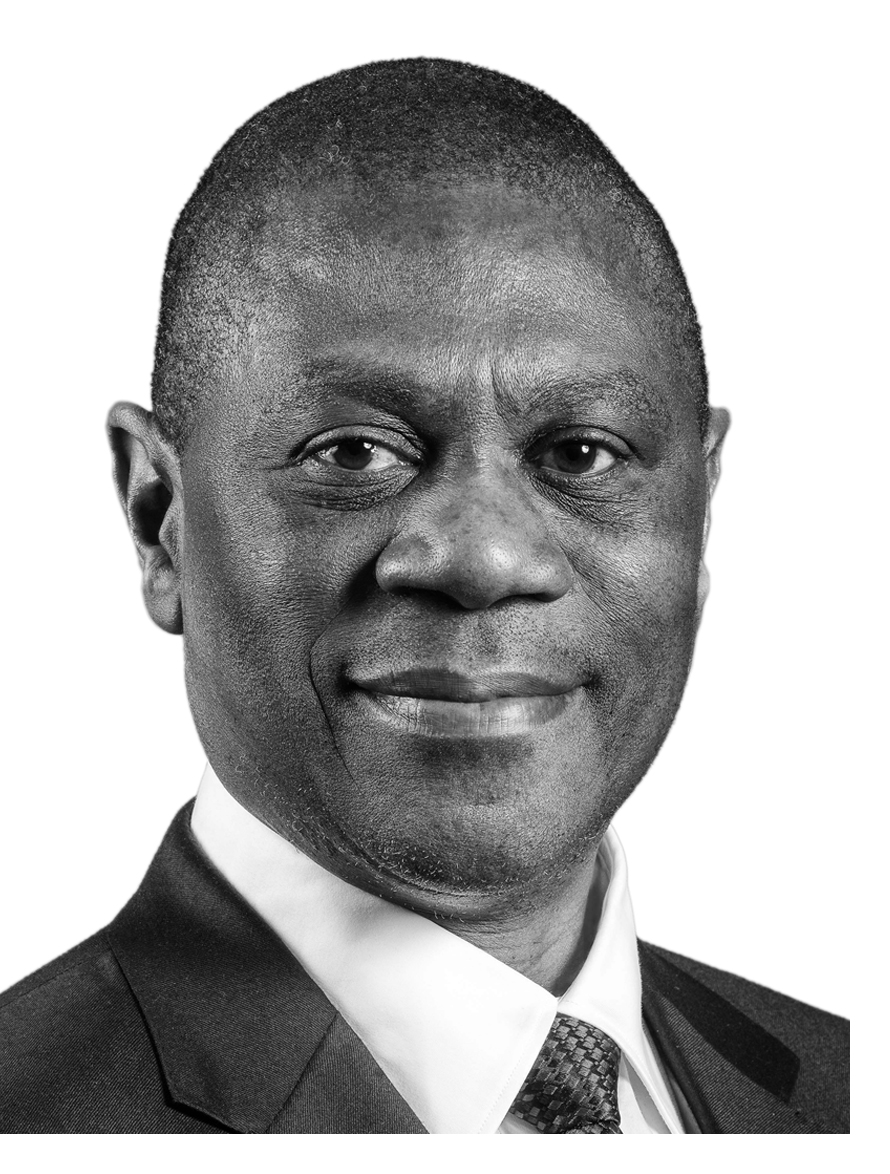
Keynote address by Chairperson of the Human Resource Development Council (HRDC), Deputy President Shipokosa Paulus Mashatile, at the 5th HRDC Summit 2026, Gallagher Convention Centre, Gauteng
Programme Director, Deputy Minister Nomusa Dube-Ncube;
Gauteng Acting Premier, Ms Nomantu Nkomo-Ralehoko;
Minister of Higher Education and Training, Mr. Buti Manamela;
Ministers, Premiers and MECs in attendance;
Deputy Chairs of the HRD Council, Mr. Duncan Luvuno and Dr. Thembi Xaba;
Former Deputy Chairs who are present this morning;
Head of Secretariat of the Human Resource Development Council of South Africa, Mr. Maliviwe Lumka;
Director-General in The Presidency, Ms Phindile Baleni, and other DG’s Present;
Leaders of labour, business, and civil society;
Distinguished guests;
Ladies and gentlemen;
Dumelang/ Avuxeni.
It is both an honour and a privilege, on behalf of the Government of the Republic of South Africa, to welcome you to the Fifth Human Resource Development Council Summit. We have gathered under the timely and compelling theme, “Living and Working in a Changing World.”
We convene during a period of significant transformation, both globally and domestically. Equally, the meeting of the Human Resource Development Council takes place shortly after the successful launch of the Artificial Intelligence Laboratory at Gert Sibande TVET College in Mpumalanga. This initiative adds to a growing number of interventions aimed at aligning skills development with emerging technologies and the evolving needs of the economy.
These efforts include the expansion of Centres of Specialisation at TVET colleges in areas such as digital electronics, automation and advanced manufacturing; the integration of coding, robotics and data analytics into basic and post‑school education curricula; partnerships with the private sector to establish digital skills academies and industry‑aligned training hubs; and the use of online learning platforms to widen access to scarce and future‑oriented skills.
Collectively, such initiatives demonstrate the importance of scaling technology‑driven skills programmes so that South Africa’s human resource development system remains responsive to rapid technological change, including artificial intelligence, digitalisation and automation, while preparing young people and workers for the jobs of the future.
The ways we learn, work, and engage in society are undergoing significant transformation. Technological innovation, demographic shifts, environmental challenges, and economic uncertainty are realities that are reshaping the definition of work itself. In such a context, these realities compel us to rethink not only skills for jobs but also human development for life.
Against this backdrop, this Summit represents an important turning point. It coincides with the launch of the Reconceptualised Human Resource Development Strategy 2025–2035, alongside its implementation framework, the Master Skills Plan 2025–2030, and it will culminate in the adoption of a Summit Declaration that reaffirms our shared responsibility as social partners.
Minister Manamela, we wish to acknowledge and commend your leadership in finalising this Reconceptualised Strategy and the accompanying Master Skills Plan. Together, these instruments will guide and energise our collective efforts to advance human resource development over the coming decade.
This fifth iteration of the HRD Strategy, first introduced in 2001 and periodically reviewed, confronts lessons that have emerged over time, among them, uneven ownership, fragmented implementation, and a limited appreciation of human development beyond narrow skills acquisition.
In earlier phases, particularly within the Post-School Education and Training System (PSET), the focus rested heavily on employable skills, especially within colleges. Since the 2021 Summit, however, the pace and scale of global change, most notably the rapid rise of artificial intelligence (AI), have compelled a decisive shift in emphasis.
Today, success in a dynamic and uncertain world increasingly depends on human and social capabilities such as analytical thinking, communication, creativity, collaboration, resilience, and adaptability. Automation and AI are transforming industries at a speed that often exceeds the ability of education and training systems to respond, leading to a growing skills gap that threatens workforce readiness and economic stability.
At the same time, South Africa’s youthful population is reshaping workplace culture and expectations, while climate change is redefining how and where people live, learn, and earn, necessitating a shift in educational approaches to better prepare individuals for these evolving challenges.
In this environment of a changing world, technical competence alone is no longer sufficient. Ethical leadership, critical thinking, and social capabilities are now equally essential. Our challenge, therefore, is not simply one of skills alignment but of capability expansion as well.
It is precisely for this reason that the reconceptualised HRD Strategy moves deliberately beyond a narrow, supply-side understanding of human resource development. It embraces a holistic value chain from early childhood development to lifelong learning; from employability to productive citizenship; and from economic participation to social cohesion.
These instruments, the reconceptualised HRD Strategy and the MSP, are launched under the unifying banner of “One Country, One Strategy, One Plan.” This is a conscious response to the fragmentation, duplication, and uneven execution that have, in the past, weakened our collective impact. It is also an apt vision for a nation governed through a Government of National Unity, one that recognises human development as a shared, all-encompassing national endeavour.
As we advance the Medium-Term Development Plan, we are acutely aware of the urgency of confronting South Africa’s triple challenges of poverty, inequality, and unemployment. This Summit must therefore, do more than diagnose problems; it must help us determine how we act together decisively, coherently, and at scale.
The reconceptualised HRD Strategy and the MSP are intended to be practical guides for this joint endeavour, and I trust that by the conclusion of this summit, we will all stand ready to commit to their implementation.
Ladies and gentlemen,
In support of these core policy documents, we are introducing an addendum. A dynamic supporting instrument that the Council will update as circumstances evolve. These documents are the product of extensive consultation across all constituencies. In the interests of progress, the HRD Council has already endorsed the Strategy for implementation.
In a moment, I will formally hand over copies of the Strategy to leaders of business, organised labour, Government, and civil society. I invite every constituency to reflect carefully on how and where it can contribute to advancing these priorities.
This Strategy does not replace existing plans and programmes; rather, it aligns them, clarifies national priorities across each thematic area, and strengthens our ability to monitor progress at a macro level.
The Strategy must be understood as a guide for how we work together. Reports to Council should not be treated as compliance exercises but as opportunities to highlight collaboration, problem-solving, and shared impact.
Guided by the National Development Plan, the reconceptualised Strategy identifies four goals and twelve interventions across the HRDC’s three thematic areas.
In schooling, these include early childhood development, reading for meaning, and curriculum differentiation, each requiring deep collaboration. In youth development, the emphasis falls on relevant short courses and expanded workplace experience, particularly within growth sectors such as the green and digital economies. Building a capable state, the third thematic area, demands close coordination across Government, supported by institutions such as the Public Service Commission and the National School of Government, with active participation from labour and business.
Therefore, what we seek from this Summit is a simple but powerful commitment that whatever we do in the field of human development, we will do together, in partnership with relevant social actors. A draft declaration reflecting this commitment has been circulated, and we hope constituency leaders will formally signal their support as we conclude the Summit.
We recognise, without hesitation, that Government alone cannot deliver human development. Skills, employability, and state capability require deep social compacts grounded in trust, accountability, and shared ownership.
This understanding is formalised in the Summit Declaration, through which we should commit to affirming the Strategy and Master Skills Plan as our collective blueprints; strengthening implementation of existing social compacts; refreshing them to respond to technological and labour market change; and reporting annually to demonstrate real, collaborative impact.
The declaration is significant because it shifts us decisively from policy intent to shared accountability. It recognises that “living and working in a changing world” demands that we work differently together.
Our work should remain firmly grounded in South Africa’s lived realities. While recent labour force data offers modest encouragement, it also reveals a sobering truth. Millions of discouraged work seekers, particularly young people, have disengaged entirely from the labour market. For them, exclusion from work represents not only an economic loss but also a loss of dignity, purpose, and hope.
It is for this reason that the Strategy identifies four catalytic goals with the potential to unlock system-wide impact:
· Improving early learning and schooling outcomes, recognising that foundational capabilities determine life opportunities.
· Improving the employability of youth who are not in employment, education, or training, especially through short courses, work-based learning, and entrepreneurship.
· Enhancing the responsiveness of the post‑school education and training system, particularly to skills demanded by the green, digital, and care economies.
· Building a capable, ethical, and developmental state, without which no reform can be sustained.
Together, these catalytic goals are designed to trigger system-wide impact, to ignite renewal, and to ensure that our people live and work with dignity in a changing world.
Colleagues,
South Africa does not suffer from a shortage of plans. Our vulnerability lies in implementation gaps, weak coordination, and uneven ownership, which hinder the effectiveness of existing plans and prevent us from achieving our development goals. That is why the HRD Council, supported by its Secretariat and Standing Committees must now intensify its role as convener, monitor, and problem‑solver. Reports to Council must help unblock constraints, leverage partnerships, and demonstrate real progress on the ground.
The Strategy and the MSP are explicit; they are living instruments, and their custodians will be held accountable over the next decade. This Summit therefore marks not the end of a planning cycle but the beginning of a delivery phase. We need to get things done with no procrastination.
The idea of living and working in a changing world is about agency. It is about ensuring that South Africans, especially the youth, are not passive victims of change but active shapers of their futures. Our responsibility is to keep development pathways open, relevant, and dignified.
Allow me at this stage to formally recognise the members of the newly appointed HRD Council, who will be the custodians of this strategy. This Council represents all constituencies, and we have already witnessed their collaborative efforts to enhance human resource development in South Africa. We trust that Council members will take ownership of the Strategy and ensure that it is properly “socialised” among their members.
Honoured guests, ladies, and gentlemen, it is my pleasure to formally launch the Reconceptualised Human Resource Development Strategy 2025–2035 and to declare the 5th HRDC Summit officially open.
I wish you fruitful deliberations and look forward to receiving your resolutions and recommendations.
I thank you, Inkomu.
.png)

.png)