


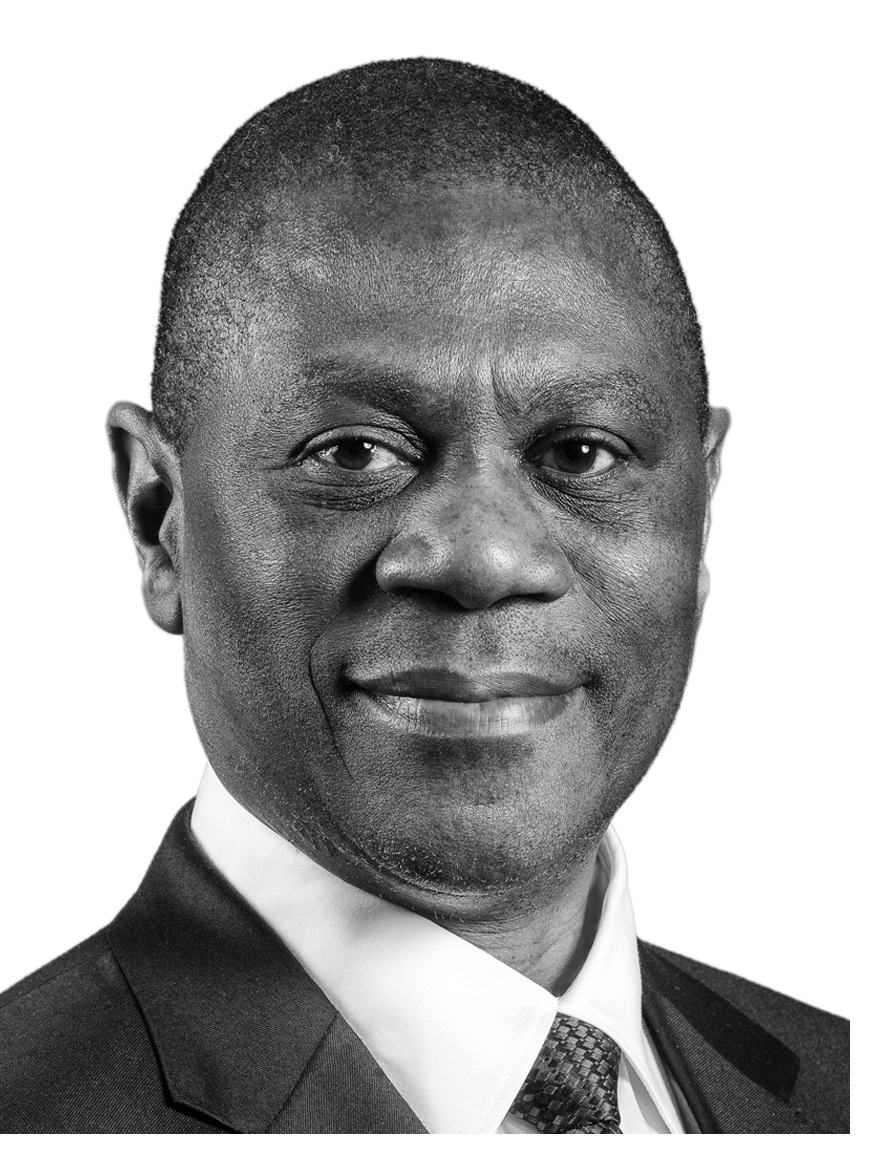
Keynote address by Acting President of the Republic of South Africa, His Excellency Mr Shipokosa Paulus Mashatile at the Launch of the 16 Days of Activism for No Violence Against Women and Children, Middelburg, Mpumalanga
Programme Director;
Ms Sindisiwe Chikunga, Minister in The Presidency for Women, Youth and People with Disabilities;
Ms Mmamoloko Kubayi, Minister of Justice and Constitutional Development;
Distinguished guests;
Leaders of Faith-Based Organisations and Community Leaders present;
Community members,
Good Afternoon.
It is an honour to deliver this address today on behalf of President Cyril Ramaphosa as we mark the national launch of the 2026 campaign for the 16 Days of Activism for No Violence Against Women and Children. I thank the people of Mpumalanga, the Provincial Government, Nkangala District Municipality, and Steve Tshwete Local Municipality for hosting this very significant programme.
Mpumalanga is not merely the host of today’s event. It is a vital part of the national effort that must carry the commitments we make here into homes, schools, streets, workplaces, farms, mines, and communities across our entire country.
For far too many years, our nation has been fighting the devastating pandemic of gender-based violence and femicide (GBVF), a crisis that continues to threaten our homes and our shared humanity. The Human Sciences Research Council’s (HSRC) first national gender-based violence study found that more than one in three adult women in South Africa have experienced physical or sexual violence in their lifetime.
Statistics must never hide human suffering; they must show where we are failing and what must change. Behind every number is a mother, a daughter, a sister, or a friend with names, families, and ambitions whose life, dignity, and future were ripped away in the very spaces where they should feel safest.
While we have made strides in raising awareness and declaring this scourge a national disaster, promises on paper are no longer enough to protect the vulnerable.
We gather today, five days before the annual campaign officially begins on 25 November, because the danger facing women and children does not follow a calendar. It does not wait for an awareness campaign to start, nor does it pause when the speeches end.
This occasion must therefore be about more than awareness; it must be about responsibility, accountability, and practical change. We owe the women and children of South Africa a response measured not by what we announce, but by what actually changes in their daily lives.
The theme of our 2026 campaign is ‘Letsema: Men, Women, Boys and Girls working together to end Gender-Based Violence and Femicide’. It is a call rooted in a simple, powerful South African tradition: when a community faces a challenging task, neighbours join hands and share the work. For generations, Letsema has brought people together to achieve what no single household could easily accomplish alone.
In confronting GBVF, that spirit of collective effort must become our national way of working. Violence against women and children is not a private family matter, and ending it cannot be left to survivors, women’s organisations, courts, or the police alone.
Ending GBVF cannot be treated as a seasonal effort. From 25 November to 10 December, we will hold dialogues, strengthen public awareness, support survivors, and call on every sector of society to act. However, our commitment cannot begin and end within sixteen days.
This campaign must serve as the heartbeat of a relentless, 365-day movement to eradicate violence from our streets and homes. Whether in government offices, corporate boardrooms, classrooms, places of worship, or our own living rooms, silence and inaction are no longer options.
When harm does occur, the state must never worsen a survivor’s trauma. For too long, survivors have had to navigate a fragmented system, retelling their painful experiences across different offices while seeking help.
Earlier this morning, at King Nyabela Hospital, we marked the launch of a new Thuthuzela Care Centre (TCC). A centre such as this is not just another government facility. Its meaning is found in a moment that no woman or child should ever have to experience: the moment after violence, when a person needs to be believed, protected, treated with dignity, and shown a clear path to justice.
This Thuthuzela Care Centre changes that reality by bringing medical care, counselling, and legal support together under one roof. Every person who walks through those doors will be met with privacy and unwavering support from trained professionals. By establishing this haven, we are sending a clear message that survivors do not have to be stripped of their dignity and shamed twice.
To ensure every police station, clinic, and courtroom becomes a real place of refuge and restoration, we are backing these commitments with resources. Following engagements with National Treasury, the Department of Women, Youth and Persons with Disabilities was allocated an additional R157.4 million over the medium term to strengthen national coordination and oversight of the GBVF response.
While sustained funding is still needed for the full implementation of the National Strategic Plan (NSP) and the GBVF disaster response, these investments are focused on expanding courts, care centres, and social work capacity to guarantee immediate safety and swift justice for our most vulnerable, women, children, youth, older persons, and persons with disabilities.
Since the 2018 Presidential Summit and the adoption of the 2020 National Strategic Plan on GBVF, we have driven legal reforms and expanded survivor services across six core pillars. However, we must be honest about where we stand.
The Five-Year Review of the NSP reveals how much work remains: of 191 indicators assessed, only 65 were achieved, while 104 remain in progress and 22 were missed. Most concerningly, only six of 42 targets for prevention and social cohesion were met.
To close these gaps, the President announced four immediate national interventions on 29 September to accelerate the implementation of the NSP. While national in scope, their success depends on effective execution by provinces and municipalities, guided by a common accountability framework:
1. National Case-Recovery Operation: Law enforcement and justice institutions are required to review unresolved murders, attempted murders, rapes, and serious sexual offences involving women and children. The goal is to determine why cases stalled, close evidentiary gaps, and assign clear accountability. For victims and their families, this ensures that they are not forgotten by the system and that justice delayed does not become justice denied.
2. Elimination of Forensic Backlogs: Forensic evidence is critical to identifying perpetrators and securing convictions. The President has directed the implementation of a funded backlog-reduction plan, supported by clear turnaround standards and prioritised processing for cases involving the rape or murder of women and children.
3. Women's Safety Audits in Every Municipality: Unsafe infrastructure, including poor lighting, unsafe transport routes, abandoned buildings, and neglected public spaces, increases vulnerability to violence. Every municipality must now work with communities, law enforcement, and provincial authorities to identify these risks and incorporate corrective measures into funded municipal plans with clear timelines. Critically, communities must be able to see what risks were identified and what actions have been taken, ensuring transparency and public accountability.
4. Addressing Alcohol-Related Violence: While alcohol can never excuse violent behaviour, and responsibility rests solely with perpetrators, evidence shows that harmful alcohol use is a major contributing factor in many incidents of violence. The Government is implementing a coordinated legislative, regulatory, and enforcement response, taking stronger action against unlawful liquor trading while expanding support services to reduce alcohol-related harm.
Budgets, courts, and police alone cannot win this fight if we continue to shield perpetrators or remain silent. More importantly, we cannot simply arrest or prosecute our way out of this crisis; we must stop violence before it even begins.
This requires a decisive shift toward primary prevention by dismantling the harmful social norms that excuse abuse.
On 23 October 2026, the Department of Women, Youth and Persons with Disabilities launched the National Positive Masculinity Programme in Ermelo, right here in Mpumalanga, under the theme "Real Men and Boys Build, Protect and Transform."
True transformation demands that men step forward, not as passive bystanders, but as visible, accountable leaders. We must redefine strength by building emotional literacy, promoting responsible citizenship, and insisting on zero tolerance for abuse. When men hold themselves and one another accountable in the streets, boardrooms, taverns, and homes, we break the cycle of silence and teach one another that true strength lies in shielding women and children from harm.
At the same time, we must confront the economic realities that trap far too many people in cycles of abuse. Poverty and financial dependency strip away choices and force survivors to remain in dangerous environments. True prevention starts with economic independence; this means expanding access to jobs, entrepreneurship, land, and reliable social safety nets so that women and vulnerable groups have the security to walk away from harm and rebuild their lives.
Policies and budgets do not change a nation on their own, real transformation happens in the daily habits of the people. Under a true Letsema and whole-of-society approach, elders and youth, traditional and faith leaders, civic groups, and neighbours must sit at the same table to build local solutions that work. When every street, village, and ward takes responsibility for safety, violence loses its hiding places.
As we move forward, we must also listen to survivors not as symbols to be put on display at an event, or people asked to relive their trauma simply to move an audience for a moment, but as individuals whose lived knowledge can reveal the strengths and failures of our systems.
To ensure the real achievement of this campaign is measured in the months that follow, I make these specific calls to action:
• To National Departments: Make your responsibilities clear and report honestly on delivery.
• To Premiers and Provincial Administrations: Translate national directives into practical programmes responsive to the needs of your communities.
• To Municipalities: Make safety visible in your budgets, maintenance programmes, and public spaces.
• To Law-Enforcement and Justice Institutions: Protect the integrity of cases and the dignity of survivors.
• To the National Council on GBVF and Social Partners: Promote public accountability and sustain a whole-of-society response.
Let us leave Middelburg determined that our next report would contain more than activities completed and meetings convened. It must tell us that more survivors received timely care; that unresolved cases are moved forward; that unsafe spaces were repaired, that children found protection, and that our communities became places where women and girls live freely.
A safer South Africa will not be handed to us. It will be forged through thousands of deliberate choices made every single day, by the officer behind the desk, the magistrate on the bench, the nurse in the ward, the teacher in the classroom, the official in the municipality, and every one of us in our workplaces, our homes and places where we socialise.
To anyone enduring abuse today, hear this clearly: you are not invisible, your story is not over, and you still hold the power to reclaim your life and your future. We stand with you.
With that commitment, it is my solemn duty to officially launch the 2026 campaign for the 16 Days of Activism for NO Violence Against Women and Children.
As you leave today, I call on you to act. Let us build a South Africa where no child is afraid to tell the truth, where no survivor must beg to be believed, and where no woman has to negotiate with fear just to live an ordinary life.
That is the South Africa our Constitution demands.
It is the South Africa our people deserve.
And it is the South Africa that starts with us, today!
I thank you. Inkomu.
.png)

.png)