




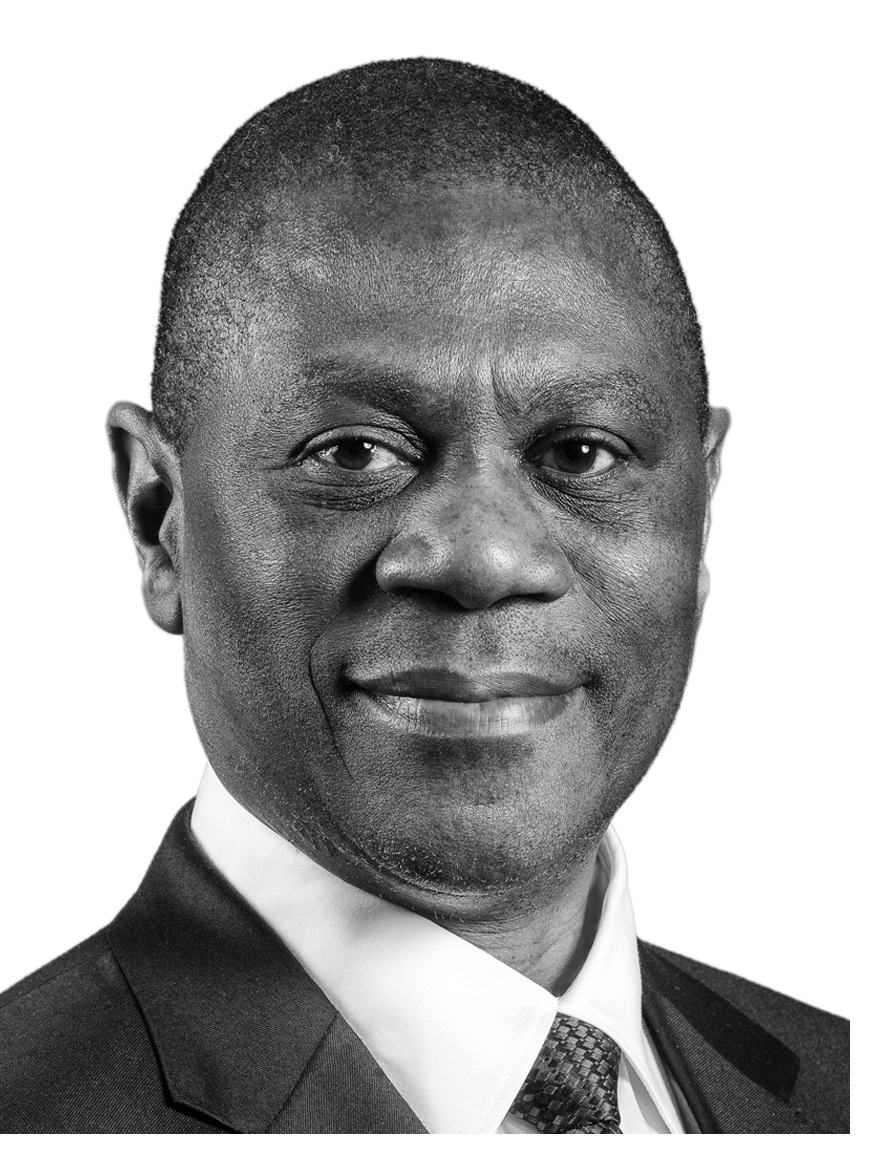
Keynote address by Acting President Shipokosa Paulus Mashatile at the South African Traditional Leaders' Awards, Sun City, Moses Kotane Local Municipality, Bojanala District, North West Province
Programme Director;
Your Majesties, Kings and Queens;
Chairperson of the National House of Traditional and Khoi-San Leaders, Kgosi Seatlholo;
Chairpersons of Provincial Houses present;
Our esteemed Traditional and Khoi-San Leaders;
Amakhosi, Dikgosi, Izinduna and representatives of Traditional Councils;
Ministers and Deputy Ministers;
Our honoured nominees for the Traditional Leaders Awards;
Distinguished Guests;
Ladies and Gentlemen;
Good Evening, Dumelang, Riperile, Sanibonani!
I wish to begin by thanking the organisers of the South African Traditional Leaders Awards, together with the National House of Traditional and Khoi-San Leaders, for creating an opportunity to honour men and women whose commitment to their communities often receives far less recognition than it deserves.
Through these awards, we say with one voice: we see you, we honour you, and we thank you for your service.
In a world where leadership is often measured by visibility, it is easy to overlook those whose greatest contributions are made far from the spotlight. Yet some of the most important work of nation-building happens quietly, every day, in villages, communities and Traditional Councils across our country.
It is there that Traditional Leaders provide guidance, nurture social cohesion, resolve disputes, protect our cultural heritage and help build stronger communities.
Today, we pause to recognise this service and the sacrifices made by those who dedicate their lives to the wellbeing of others.
While individual leaders will receive awards today, this recognition also belongs to the communities they serve. Leadership is never exercised in isolation. Every achievement reflects a partnership between leaders and citizens working together to improve lives and create hope for future generations.
Ladies and Gentlemen,
Our Constitution recognises the institution, status and role of traditional leadership, in accordance with customary law. This recognition speaks to the important place that traditional leadership occupies in our democratic society.
It is an institution deeply rooted in our history, but whose relevance must also be demonstrated through its contribution to the present and future of our country.
Government recognises and values the important role played by Traditional Leaders. In times of economic hardship, social challenges and uncertainty, they are often among the first sources of support, guidance and counsel within communities.
As custodians of our culture, traditions and values, Traditional Leaders play a critical role in preserving our identity while helping communities navigate a rapidly changing world. Their leadership reminds us that progress is strongest when it remains anchored in the principles and traditions that define us as a people.
True leadership is not measured by title or status, but by example. The renowned African writer Chinua Achebe observed that the greatest challenge of leadership is "the challenge of personal example."
This is a standard that many of our Traditional Leaders continue to uphold, and it is this example that we celebrate today.
South Africa's strength lies in its diversity, rich cultural heritage and the enduring spirit of ubuntu. Traditional Leaders are central to nurturing that spirit and strengthening the bonds that unite our communities.
In his book No Future Without Forgiveness, Archbishop Desmond Tutu captured the essence of ubuntu when he wrote:
"My humanity is caught up, is inextricably bound up, in yours."
Ubuntu reminds us that our wellbeing is connected to the wellbeing of others. It calls on us to treat one another with dignity, compassion and respect.
However, ubuntu also demands responsibility. It requires respect for the law, respect for elders, respect for women and children, and respect for the dignity of every human being.
The preservation of our traditions must go hand in hand with the protection of human dignity. Culture and tradition must never be used to justify discrimination, violence or the abuse of women and children.
Communities founded on these values cannot tolerate violence, abuse or lawlessness.
It is for this reason that I call on Traditional Leaders to continue working closely with Government and all sectors of society to confront the challenges that threaten our communities, particularly Gender-Based Violence and Femicide, substance abuse, crime and the growing social challenges facing many of our young people.
These are not simply government challenges. They are community challenges. They undermine families, limit opportunities and weaken the very fabric of our society.
Traditional Leaders must be among the strongest voices championing the safety and dignity of women and children, challenging harmful practices, promoting respect for human life and fostering a culture of accountability and responsibility.
Working together with Government, faith-based organisations, law enforcement agencies and communities, Traditional Leaders can help turn the tide against crime and violence and build communities where every person feels safe, valued and protected.
We cannot allow our communities to become playgrounds for perpetrators of Gender-Based Violence and crime. Every perpetrator must face the full might of the law, and every community must stand united to protect women, children and the vulnerable.
Ladies and Gentlemen,
Government is implementing a range of interventions to address crime, Gender-Based Violence, poverty and unemployment. However, lasting change cannot be achieved through government action alone. It requires strong partnerships with communities and the institutions of traditional leadership.
One of our key priorities is the development of small, medium and micro enterprises as a driver of local economic development, particularly in rural areas.
The question we must continually ask ourselves is how we translate the enormous potential of our rural communities into tangible economic opportunities for our people.
Our traditional communities are endowed with land, natural resources, agricultural potential, cultural heritage and tourism opportunities. These must become the foundation for local economic development.
Our objective is clear: no South African should be forced to leave their home, family and community simply to find economic opportunities elsewhere.
Rural communities must seize opportunities in agriculture, agro-processing, small industrial parks, tourism and other local enterprises to build sustainable livelihoods.
Traditional Leaders have a critical role to play in this regard. As custodians of communal land and trusted leaders within their communities, they are uniquely positioned to champion local economic development, support emerging entrepreneurs, facilitate investment and encourage greater participation in productive economic activity.
They must be active partners in ensuring that communal land is used productively, that local entrepreneurs are supported, that young people participate in economic activity and that communities benefit meaningfully from investments taking place in their areas.
Their leadership is essential in unlocking the enormous potential of rural South Africa and ensuring that development reaches those who need it most.
Working hand in hand with the institution of Traditional Leadership, Government remains committed to creating an enabling environment for enterprise development, attracting investment and unlocking the full economic potential of rural communities.
Together, we can build thriving local economies that create jobs, restore dignity and improve the quality of life for all our people.
This is what development should mean.
It is not only about economic growth. It is also about expanding people's choices and opportunities.
Our priority is to free our people from poverty, unemployment, insecurity and hopelessness. This means creating conditions in which individuals and communities can realise their full potential.
Traditional Leaders are indispensable partners in this mission because strong, stable and cohesive communities are the foundation upon which meaningful and inclusive development is built.
Esteemed Traditional Leaders,
We have not turned a blind eye to the challenges facing the institution of Traditional Leadership. We are working systematically, and with urgency, to address them.
We recognise that some of these matters have remained outstanding for too long. We understand the frustration they have caused within the institution, and we will not hide behind excuses.
We remain committed to working with the National House and Provincial Houses to resolve these matters through constructive engagement and practical interventions.
Among our priorities is the transfer of land into the ownership of Traditional Councils as custodians on behalf of communities.
Land is more than a productive asset. It is identity, dignity, heritage and livelihood. It must therefore be held securely for the benefit of present and future generations.
We have also engaged through the Remuneration Commission to address challenges relating to the wage bill and remuneration within the institution, with a view to finding sustainable and equitable solutions.
Development also demands freedom from fear. Let me therefore speak plainly about the safety of our Traditional Leaders.
We are aware of the concerns that have been raised regarding mining in traditional communities.
Those who orchestrate and carry out attacks on Traditional Leaders must be identified, arrested and brought to justice. No one is above the law, and no one must be allowed to silence those who serve our people.
We also welcome the ongoing engagement between the National House of Traditional and Khoi-San Leaders and the Minerals Council South Africa. These discussions are important in ensuring that mining activities create real and sustainable benefits for host communities.
Mining must be a catalyst for development, not a source of conflict and hardship.
The communities whose land and natural resources sustain this industry must be meaningful participants in the economic opportunities it creates. This includes employment, skills development, enterprise opportunities and investment in community infrastructure.
Communities living in mining areas must see tangible improvements in their quality of life. The benefits of mining must extend beyond the lifespan of the mine itself.
No community should be left with only environmental damage and social hardship after the minerals have been exhausted.
Ladies and Gentlemen,
These awards must do more than recognise past achievements. They must inspire a renewed commitment to service, excellence and ethical leadership.
They must encourage Traditional Leaders to go beyond the ordinary, to drive development, promote peace and leave their communities stronger than they found them.
Nation-building is never finished, and it is never the work of one hand alone. It requires all of us working together in pursuit of a common future.
Going forward, we must further strengthen the values of ubuntu while building safer communities. We must create opportunities for our young people and collaborate to eradicate poverty, unemployment and inequality.
Let us build a South Africa in which every person can live in dignity, safety and hope.
To all nominees and recipients, I extend my heartfelt congratulations. You are the pride of your communities and an inspiration to our nation.
As we honour our Traditional Leaders tonight, let us remember that the true measure of leadership is not the recognition it receives, but the lives it touches and the communities it transforms.
The legacy of a Traditional Leader must be seen in the opportunities created for young people, the protection afforded to women and children, the unity fostered among communities and the dignity restored to those who have been left behind.
Let these awards inspire us to build an institution of traditional leadership that is respected for its wisdom, strengthened by its integrity and recognised for its contribution to a better South Africa.
Together, let us build communities where tradition and progress reinforce one another, where development reaches every household and where no one is left behind.
Let us continue to walk together, Government and Traditional Leaders, united by a shared commitment to serve our people and build a South Africa in which every community enjoys peace, dignity, prosperity and opportunity.
I thank you, Inkomu.
.png)

.png)