



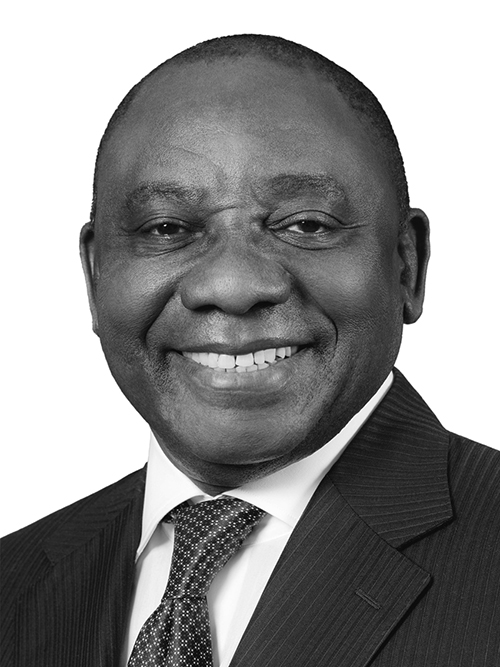
Opening remarks by President Cyril Ramaphosa at the 2026 South Africa Investment Conference (SAIC), Sandton International Convention Center
Programme Directors,
Deputy President of the Republic of South Africa, Mr.Shipokosa Paulus Mashatile,
Minister of Trade, Industry and Competition of the Republic of South Africa,
Mr Parks Tau,
Ministers and Deputy Ministers,
Premiers of the provinces,
Secretary-General of the African Continental Free Trade Area Secretariat, Mr.
Wamkele Mene,
Mayor of the City of Johannesburg, Cllr Dada Morero
Ambassadors and High Commissioners,
Business leaders,
Representative from labour, civil society and political formations,
Guests,
Ladies and Gentlemen,
Good morning,
Welcome to South Africa and to Gauteng, the Place of Gold – our country’s largest economic hub.
A hundred and forty years ago, the discovery of gold beneath the soil here set in motion an industrial boom that would shape South Africa’s economic destiny.
Today, Gauteng is a financial and industrial powerhouse that contributes the largest share to our national GDP.
The City of Johannesburg is Africa’s financial capital and home to Johannesburg Stock Exchange, the largest and most advanced bourse on the continent.
It had started somehow in Kimberley when diamonds were discovered, when one of those who looked at that shiny stone and said: “it is on this stone that the future of
South Africa will be built.”
That was in 1867, in 1888 they moved further north and found gold in this place. Today Gauteng is a financial and industrial powerhouse that contributes the last
share of our GDP as a nation.
The city of Johannesburg is South Africa's financial capital and home to Johannesburg Stock Exchange, the largest and most advanced boss on our continent.
The story of Johannesburg, a city founded on the promise of opportunity, is a reflection of South Africa itself.
They came here to mine gold. It was in some ways boom and bust. Boom for those who made it good and bust for the majority of black people who were not given the opportunity to really benefit from that boom.
We are a young nation, just 32 years old. The dawn of democracy in 1994 secured our freedom. Our freedom from exclusion, and freedom from oppression.
But it also unleashed our potential.
It set out an irreversible path towards progress and a shared prosperity.
Today, South Africa has the largest, most industrialized, open and diverse economy on the African continent.
Our economy is dynamic. It's enterprising, finally calibrated for growth and powered by innovation.
We have an economy that has proven itself to be remarkably resilient.
It has weathered the transition from apartheid and going even further back, from colonialism; the global financial crisis; the years of state capture that we went through; a debilitating energy crisis; and the COVID-19 pandemic.
Even amidst these strong headwinds, the South African economy has maintained core financial and institutional stability.
This year’s South Africa's investment conference takes place against a backdrop of growth as well as recovery.
Investment conferences such as this are an opportunity for us to showcase the attractiveness of investment opportunities in our country to domestic and international investors.
We are able to connect investors with local opportunities. We are also able to attract foreign direct investment. And these conferences help to facilitate strong partnerships by bringing together governments, business banks, development finance and finance institutions.
They also bring together people - ordinary people, who are able to move from contact to contact and are able, even during their tea breaks or coffee breaks, to have a conversation, exchange cards and to talk about each other's businesses.
Under the National the Government of National Unity that was formed after the 2024 elections, we have recorded four consecutive quarters of growth into early 2026 and our economy is creating more jobs.
Inflation, as we have heard, is stable and is converging towards our 3 per cent target.
Our sovereign rating has been upgraded, and last year we were removed from the Financial Action Task Force grey list.
Last year, South Africa hosted the first summit of the G20 on African soil.
Our G20 Presidency elevated South Africa's global profile and deepened bilateral relationships that are today reflected in investment commitments from 15 source markets across the five continents.
We are meeting at a time of uncertainty for the global economy.
Geopolitical fragmentation, supply chain disruptions from conflicts and wars and trade tensions are radically impacting global capital flows.
In such conditions, South Africa presents what I would call a favorable proposition as a resilient, credible and reform oriented investment destination with strong fundamentals.
Your presence here as businesspeople and investors and bankers today signals that as investors, you see what we see - real and enduring potential, long term value and untapped opportunity.
Today we have with us more than 1 200 delegates from more than 50 countries around the world who believe in South Africa's potential and see this as a favorable place to invest and to do business.
You are here because you want to be part of our growth story.
Between 2018 and 2023, having set a target of attracting R 1.2 trillion in investments – we attracted 1.5 trillion in credible, verifiable investment commitments in energy, in telecommunications, in infrastructure, property, mining, advanced manufacturing and across a range of other sectors.
This proved that South Africa is an investable market, but more importantly, it also showed that South Africa is ready to do business.
Our investment strategy is anchored in sectors that will drive growth and create jobs at scale, including manufacturing, mining, beneficiation, digital infrastructure, agriculture and the green industrialization sector.
This sixth South African investment conference is being convened under the three D’s framework that we have crafted for to label our investment drive.
These are decarbonisation, digitization and diversification, and talk to the direction we want our investment drive to take place - with the ease of doing business being a cross cutting theme.
We know that as investors, you tend to reward execution and not just commitment and not just talk.
You are here because you value ambition and you value a clear vision.
As investors, you are looking to destinations that have strong fundamentals, that are resilient, credible and reform oriented. And the South African economy meets these criteria.
The sixth South Africa Investment conference stands at the crossroads of opportunity and ambition, ready to turn pledges into projects on the ground.
The shift in our economic trajectory that are that we are witnessing now is the result of deliberate, sustained structural reform that we have embarked upon as a government.
And to do this, we set up a facility; a structure that we call Operation Vulindlela, meaning to open the way in isiZulu, one of our 12 official languages.
It is a joint initiative of the Presidency the National Treasury, bringing together all the other key departments in our government.
It is helping us to get rid of the silo mentality that often prevails in government, and this has enabled us to implement far reaching economic reforms for rapid growth.
Its mandate is simple, to reduce the cost and the risk of investing in South Africa, not through speeches like what I am doing now, but through measurable implementation.
The twin pillars of structural reform and policy responsiveness have enabled us to bring about far reaching changes that are supporting our improved economic performance.
A key priority for Operation Vulindlela from the onset was the crucial building block of solving our visa challenges. And this came about because a number of businesspeople had been experiencing challenges in that regard.
We know that investors aren’t just deploying capital. You need to establish a physical presence without undue bureaucratic delays. This is particularly critical for multinational firms that require seamless movement across borders.
We have implemented reforms to the visa regime to attract new skills and promote tourism, creating more flexible pathways for skilled immigrants through a points-based system and introducing a Trusted Employer Scheme to provide a fast-track visa process for major investors.
The electricity sector has undergone the most significant transformation since the advent of our democracy.
We have restructured national power utility, Eskom, established a National Transmission Company as an independent operator, and created a transparent, rules based framework for grid access that private investors require.
We know that as we are restructuring our energy architecture, there are a number of generators using solar, wind and many other sources of energy.
As they do so, they need to have the hope and the trust that their generation and input into the transmission is going to be well managed.
Through the National Energy Action Plan that I announced in 2022, we have brought an end to load shedding and ensured a reliable supply of electricity.
This is essential to allow businesses to operate and make decisions to invest.
Regulatory reforms in the electricity sector have already unlocked a significant and growing pipeline of investment, with more than 220 gigawatts of renewable energy projects in development, and 36 gigawatts already in the grid connection process.
Over the next five years, we will add massive new solar, wind and battery storage capacity to transition our economy towards cheap green energy and sources at scale.
We are now moving rapidly to establish a competitive wholesale electricity market and to complete the unbundling of Eskom through the establishment of a fully independent transmission operator.
At the same time, we are moving to enable private investment in expanding our transmission network through independent transmission projects.
The Minister of Electricity and Energy is working diligently to make sure that this happens.
Transitioning to a low-carbon climate resilient economy and a society remains a priority and is in line with our international climate commitments at the United
Nations, as well as our ambitious Nationally Determined Contribution to combat climate change.
Decarbonisation is the pillar of our investment strategy. It will create new investors, new industries, new jobs and new opportunities in green hydrogen, battery storage vehicle, electric vehicle manufacturing and in the manufacture of components and infrastructure that is decarbonizing the world.
The R 29 billion in confirmed renewable energy investments today is really a vote of confidence in our rapidly transforming energy sector.
South Africa's abundant mineral reserves make us uniquely placed to leverage the growing global demand for critical minerals needed for clean energy, for hybrid
electric and new energy vehicles (NEV’s), technological applications, and by other heavy industries.
As the producer of more than 70 per cent of the world's platinum group metals and with some of the world's largest manganese and chrome reserves, we are well
positioned as a strategic partner in this rapidly growing sector.
We have been firm that the energy transition must be just, and that it should leave no one behind.
This is important for us, because there are communities and workers who could be left behind as we transit to renewable energy, and our view is that we need to take them along.
They must find new jobs. They must be retrained. They must be “up trained“ and upskilled.
Our Just Energy Transition Investment Plan of 2023 - 2027 is a blueprint for decarbonising our economy and achieving energy security, whilst at the same time supporting affected communities and industries.
Efficiency in the network industries is the backbone of a competitive economy.
As we have done with the electricity sector, we are driving a series of reforms in the logistics sector to build world class rail networks and ports that are efficient, that are competitive and that will support our exports.
The cornerstone of our reform program is the National Rail Policy, complemented by the National Freight Logistics Roadmap that has been crafted.
These policies enable private investment in port and rail operations.
We have crafted an environment where the public sector and the private sector can
work together side by side to create value for our country.
Last year, we also signed a 25-year concession for the Durban container terminal, representing R 11 billion in private investment in one of South Africa's and most critical logistic notes.
A transparent and effective regime for third party access to the freight rail network is now in place. This is a demonstration by South Africa that we are willing and open to working with the private sector so that there can be mutual benefit for all.
Forty-one freight rail slots have been allocated to private train operating companies, and we expect the first private operator to commence operations in 2027.
By ending inefficient monopolies and introducing competition, we will reduce the cost of electricity and transport over time, enabling manufacturing, mining, agriculture and other industries to thrive and to compete, rather than just to continuously rely on one monopoly.
With one monopoly, innovation is quite lacking. With one monopoly, there are inefficiencies that come in.
So, with diverse operators, we find competition actually has greater benefits.
Digital Transformation holds significant potential for economic growth and investment.
South Africa already has world class digital infrastructure, near universal Internet access and smartphone penetration and a regulatory environment that enables
innovation.
We are implementing reforms that will create a digitally enabled economy and position our country as a leading hub for digital and financial services.
In these ways, we are positioning South Africa to become a major player in the economy of the future, combining the lowest cost solar and wind power in the world
with advanced digital infrastructure and a skilled workforce that can compete at a global level.
The water sector is another area where we need to focus more intently.
Reliable water access, governed by an equitable, transparent regulatory regime is key for business stability.
We have put in place a set of interventions to transform the provision as well as the management of water services across the country.
We are a water scarce country and therefore needed to pay closer attention to water supply challenges.
We are prioritizing reforms at the provincial and local government level in both the immediate and long term that will create a sustainable, well- functioning water system.
Firstly, we are establishing professionally run water utilities in all of our eight metropolitan cities with water revenues ring fenced properly and invested back into maintaining and expanding water infrastructure.
Secondly, we are establishing a robust regulatory framework to ensure that water service providers do perform their functions effectively.
We have embarked on a massive water infrastructure build program, including dam construction, distribution infrastructure upgrades, bulk water expansion and desalination.
One such project is phase two of the Lesotho Highlands water project that is targeted for completion by 2028.
These projects will be overseen by a new National Water Resource Infrastructure Agency.
The water sector is ripe for investment, and we have set up a dedicated Water Partnerships Office to facilitate private sector participation in areas such as reducing
non-revenue water investing in waste, water treatment, water desalination and reuse of water, with more than R 50 billion rand in projects already in development. So great opportunities are abundant.
Our structural reform agenda has laid the foundations, and now we are harnessing its momentum.
We are embarking on the largest and most ambitious cycle of infrastructure investment in our country's history.
Infrastructure, as I often say, is the flywheel that propels economic growth. It boosts productivity. It propels trade and reduces the cost of doing business. It creates immediate and meaningful employment opportunities at scale.
With this unprecedented investment, we are kick starting the cycle.
Over the next three years, the state has budgeted for will be investing more than R1 trillion or approximately USD 58 billion in modernising and expanding public infrastructure across South Africa.
This includes R 950 billion rand in planned infrastructure investment spending.
As much as R 375 billion has been allocated to state owned enterprises to support, maintain and upgrade and also expand infrastructure facilities.
In addition to this, our state owned enterprises have budgeted for major infrastructure projects for the medium term.
The South African National Road agency will be investing between R 300 and 400 billion for upgrading and maintaining our national road infrastructure.
Up to R 250 billion is being invested in ports and logistics and modernization, which is driven by our state owned enterprise, Transnet.
The Port of Durban, one of the busiest ports on the continent, is being expanded to handle high container volumes and to improve efficiency - with similar upgrades in Cape Town and the Port of Ngqura in the Eastern Cape.
A combined total of approximately R420 billion will be utilized by the Passenger Rail Agency for rebuilding corridors and a multi-year rolling stock programme, and to Transnet for network expansion.
As I indicated earlier, the water sector has been earmarked for substantial public investment, with projects in the pipeline, including the Olifants River Management Model and to UMkhomazi dam that is linked to Phase Two of the Lesotho Highlands Water Project.
Over the next three years, we will be investing more money in energy generation to support the Department of Energy's roadmap for long term energy security.
Other projects in the investment pipeline are to upgrade our airports to ensure that they have sufficient investments and are also able to improve their own logistics.
And in doing so, we're moving forward one project at a time.
One project of which we are particularly proud is the R 5 billion rand investment to extend the capacity of the Square Kilometer Array, the radio telescope project in the Karoo in the Northern Cape.
The SKA is currently building two supercomputers that, once completed, will be the most and will be amongst the fastest computers in the world.
This isn't just a statement to the value of strategic public investment in digital infrastructure.
It is also the reflection of South Africa's scientific excellence and world class scientific research output.
This showcases South Africa, showing that we are up there with many other countries.
To get this facility, we competed with countries such as Australia, the UK, Canada, and a number of other countries. In the end it was brought here.
It is a true wonder to see, and it is in none other place than South Africa, one of the smallest countries in the world. We are proud of that.
The location of the SKA is like the desert, the hottest place in our country. These magnificently big telescopes scan the whole universe and keep on producing some of the most outstanding photographs of what happens and continues to happen in the outer space.
For them to be building one of the biggest and fastest computers is something that possibly could never have been thought of to come out of Africa.
Ladies and gentlemen,
In my State of the Nation Address last month, I said that we will be utilizing innovative funding methods that will reduce and attract investors to fast track investment infrastructure projects.
One of these is the infrastructure fund that we established out of the need to deploy blended finance to infrastructure development.
Last year, the Fund approved blended finance projects with a combined value of approximately R 38 billion in water sanitation, student accommodation, health, energy and transport.
Last year, we also issued regulations for public private partnerships in support of attracting more private sector participation investment in the national infrastructure build.
We are also deploying innovative instruments such as the Credit Guarantee Vehicle to de risk private investment in infrastructure.
As South Africa, we remain committed to staying the cause on fiscal discipline and to accelerating momentum of the reform agenda.
The Minister of Finance in announcing his budget this year focused on the issue of fiscal discipline, and that is what we are irrevocably committed to. But also, to leverage investments to build an economy that is inclusive, that is transformed and that benefits all South Africans.
Unlike the economy that we had under apartheid that just benefited a few, the transformation of our economy is necessary to drive sustained growth, reduce inequality and correct the imbalances and injustices of the past.
We are undertaking a review to refine, to realign and strengthen our Broad Based Black Economic Empowerment framework, to ensure that it supports transformation, while at the same time enabling investment and growth.
There are those who say it is an impediment to investment, and we say it is actually one of the key ingredients that will enhance investment and growth as well.
Black Economic Empowerment provides a foundation for inclusive growth by expanding participation in the economy, enabling us to harness the skills and contribution of all South Africans.
What makes South Africa's empowerment laws distinct is that they are practical and innovative. They are inclusive, and they give a clear guarantee to everyone that growth should be shared.
In addition to pure equity participation measures, we have also, we also have what we call an Equity Equivalent Investment Programme, the EEIP.
It was created to accommodate multinational companies whose global practices or policies prevent them from complying with our empowerment laws of ownership. It enables them to invest in socio economic and skills development as well as enterprise development without having to sell equity in their local subsidiaries.
Since its inception, the EEIP has onboarded some of the world's leading multinational firms who have leveraged the program to direct investment in local development, to incubate black, youth and women owned businesses and to fund skills development.
What they have done through this it to make themselves a truly South African corporate citizen.
Our overriding objective is to support firms with compliance and to embrace empowerment as a meaningful investment in South Africa's long term economic stability.
Ladies and gentlemen,
As I conclude, we would like that investments that are made should, in the end, deliver measurable benefits, not only to one segment, the stakeholders in business, but to all investment projects.
They must include clear local content plans, formal skills transfer initiatives, community development commitments and transparent environmental safeguards.
The skilling of our people, especially young people, is critical as we embark on the skills revolution, which is underpinned by a dual training system that we are embarking on now.
We are expanding programs that will link training with universities and colleges and companies to create the pipeline of technicians and project managers and engineers
that are needed in our economy.
This is but an overview of the scale of the deep transformative changes that are taking place in South Africa in our economy, as we seek to position ourselves as an investment destination.
Our progress continues to be acknowledged by our international and continental development partners.
During our G20 Presidency we concluded a clean trade and investment partnership with the European Union valued at approximately EUR 12 billion, which amounts to
about R 237 billion. This was around the Just Energy Transition, infrastructure, skills, pharmaceutical manufacturing and other sub industries.
The African Development Bank has also confirmed R 20 billion for the 2026 financial year directed at infrastructure, energy transition, human capital and governance.
In addition, the SA–Afreximbank Investment Facility anchored by Afreximbank’s R176 billion commitment to South Africa is a structural instrument that will channel
concessional capital into the sectors where this Second Drive requires it most.
The New Development Bank, the BRICS Bank has also indicated that they will make approximately R 34 billion rand available for 2026-2027 period.
At standard leverage ratios, the development finance institution commitments alone can mobilise between R393 billion and R786 billion in additional private investment over the drive horizon.
This is what partnerships at scale looks like, and this is the type of partnership that we appreciate here in South Africa.
This year’s South Africa investment Conference marks the formal transition from recovery to expansion, from rebuilding confidence to accelerating growth in our economy.
I have laid out just some of the sectors of our economy that are ripe for investment.
More extensive opportunities also exist in agriculture, in agro- processing, in professional and financial services, in property, in digital technologies, advanced
manufacturing and other high-growth industries across the breadth and range of the South African economy.
Today, we are formally launching the second Presidential Investment Mobilization Drive with a target of R 2 trillion in new investment over the next five years.
The last time we said R 1.2 trillion which I think was being too modest. Now we are saying we want R 2 trillion.
I think it could and should be a lot higher, but I want to hear what your thoughts are, and your thoughts will be exemplified to me by making commitments that will just top the R 2 trillion mark.
In the maths of what South Africa requires to achieve growth meaningfully, we need to address the challenges that we face, mainly unemployment and to industrialize our country at scale. We aim to lead Africa's green transition and to build the infrastructure on which our people's future depends.
We do so with a keen appreciation of the current state of the foreign direct investment climate across the continent.
Africa as a whole accounts for only 4 per cent of global FDI, and recent increases have been driven largely by once off mega projects such as the USD 35 billion development in Egypt and also the Lubito Corridor investment.
Although we remain a significant continental player, accounting For between 15 and 20 per cent of Africa's total FDI, our growth depends heavily on domestic investment.
The opening position of the second drive is the R415 billion confirmed fixed investment and R 474,8 billion in DFI being announced in this room today. That brings the total to R 889,8 billion. That’s 81 projects. 9 provinces. 22 source markets. Over 230 000 permanent jobs.
Now, the mathematics that I was taught at school in an apartheid education school always taught me that you round up, you round up, and you don't round down. If a figure is closer to being rounded up, you rounded up. So, my rounding up, then brings this to R 900 billion that will be announced today.
That will be in 81 projects, nine provinces, 22 source markets, and over 230,000 permanent jobs that will be created that will have an impact on our economy. It has an impact on our people.
This is only the start of an era of new growth and dynamism for the South African economy.
The Accountability Framework is unchanged from the first drive.
Every investment announcement that will be made here will be vetted and signed and will represent a firm commitment by business leaders in this room.
Every year we will report back on what has been promised and what has been delivered.
As we seek to deepen our trade and investment relations as South Africa, we remain committed to maintaining policy certainty and to accelerating the momentum of the structural reform agenda that we are on.
A question is often asked, Is this momentum of reform sustainable? Will we see it being sustained into the future?
And my simple answer is yes.
The the reform process that we are on now is irrevocable and irreversible, because it is in the interests of our economy and of our people.
We have to transform and reform our economy so as to make it inclusive, so that all South Africans can benefit – and to enable key stakeholders to invest and make profits.
Labour must benefit. Workers should be well paid and get living wages.
Communities must feel it when businesses invest in their environments, and those businesses become good corporate citizens and be part of the community.
As for government, we are the enablers.
We will continue enabling businesses to grow for we have one interest, grow the economy, get tax revenues and continue to advance the interests of our people.
We are creating the conditions for investment led growth that is broad based, inclusive and durable.
So let us all move forward together with confidence, with partnership and with a shared commitment to enhance South Africa's future.
For as you invest, you advance the interests of our country.
As you invest, we know that you make profits, and South Africa is ready for business.
We are open for business, and we have positioned South Africa as a more conducive place to invest your money.
You can depend on South Africa.
We are reliable. We are dependable, and we are a good investment destination.
Thank you very much.
.png)

.png)